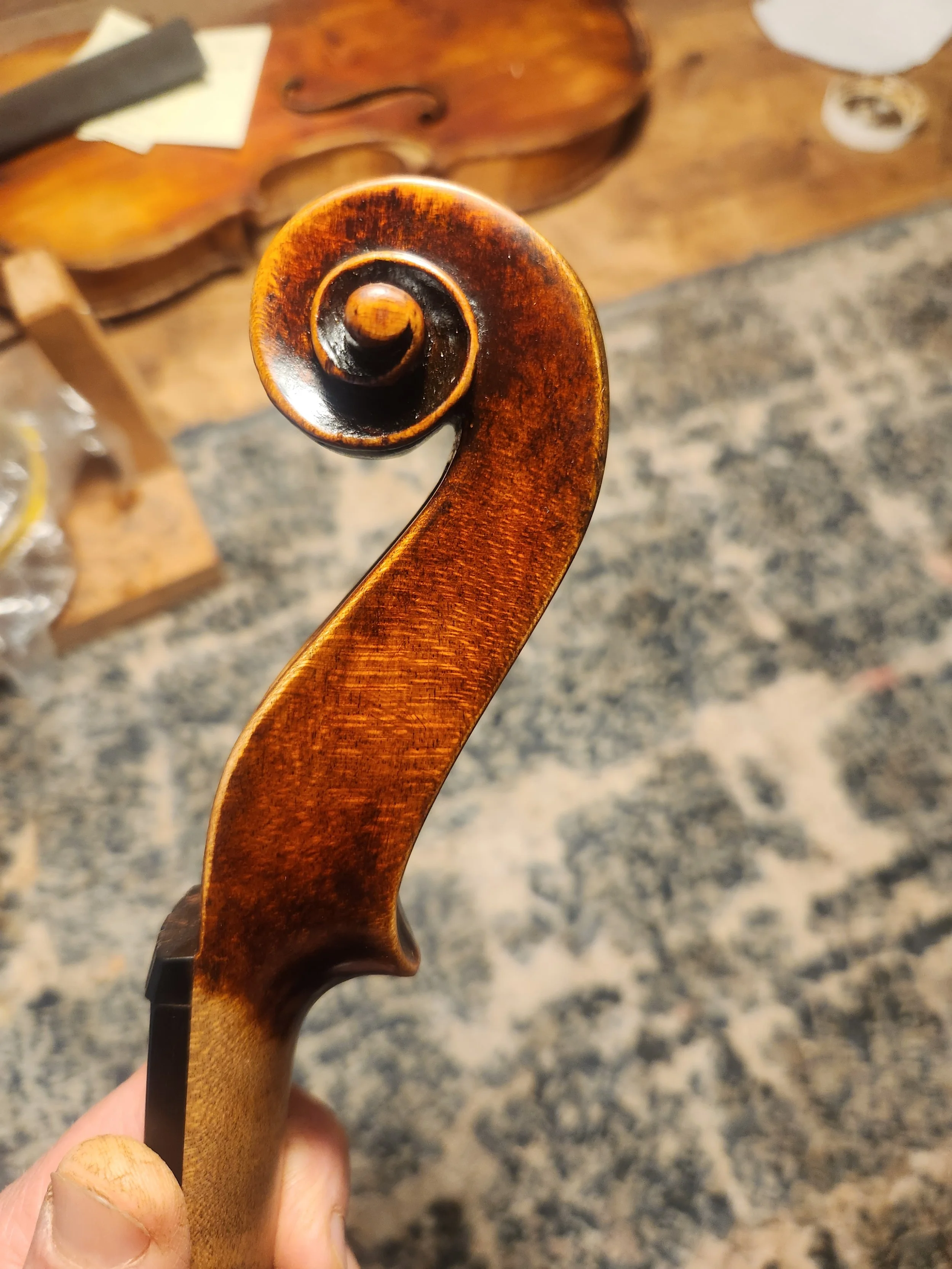
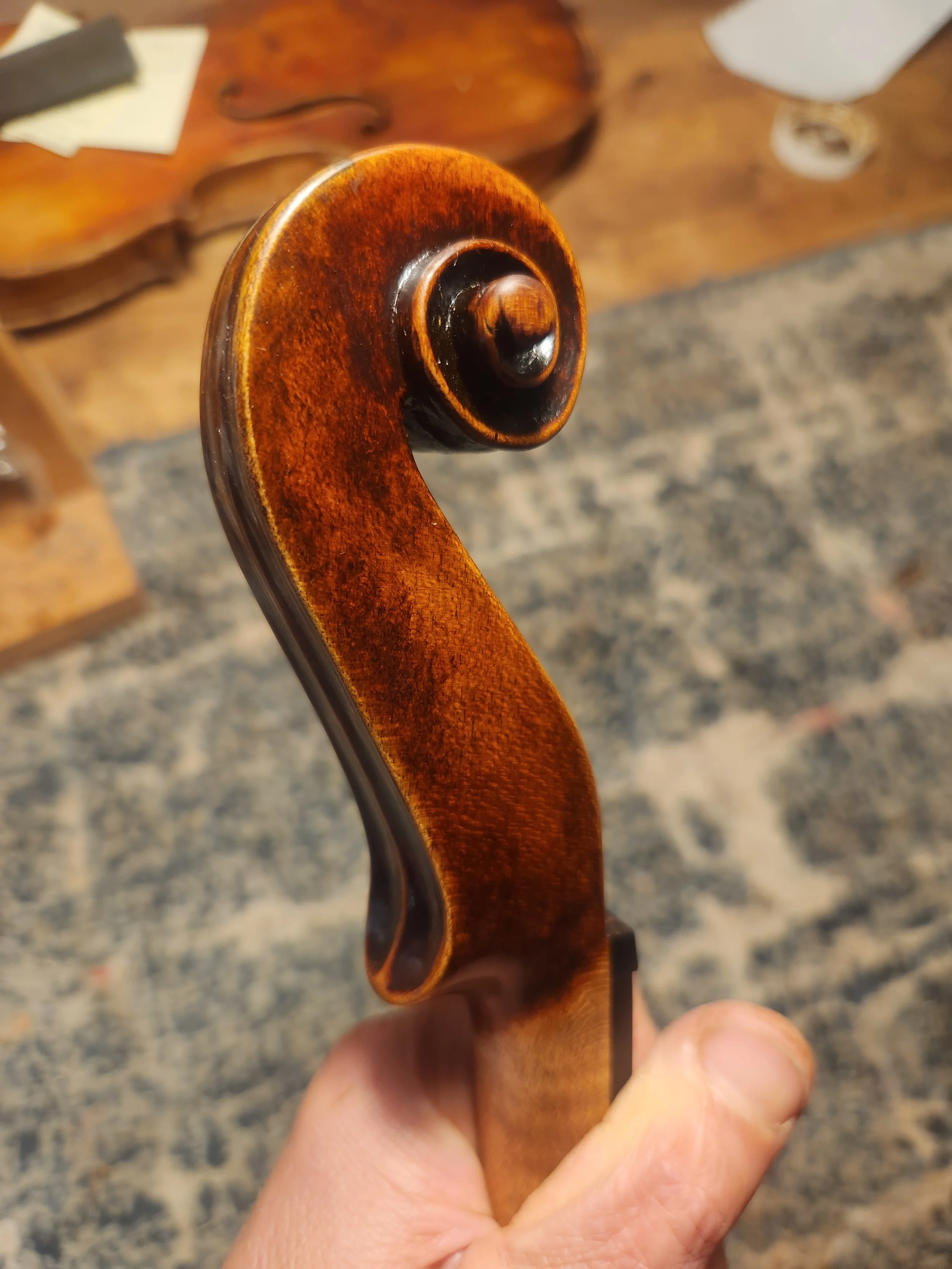
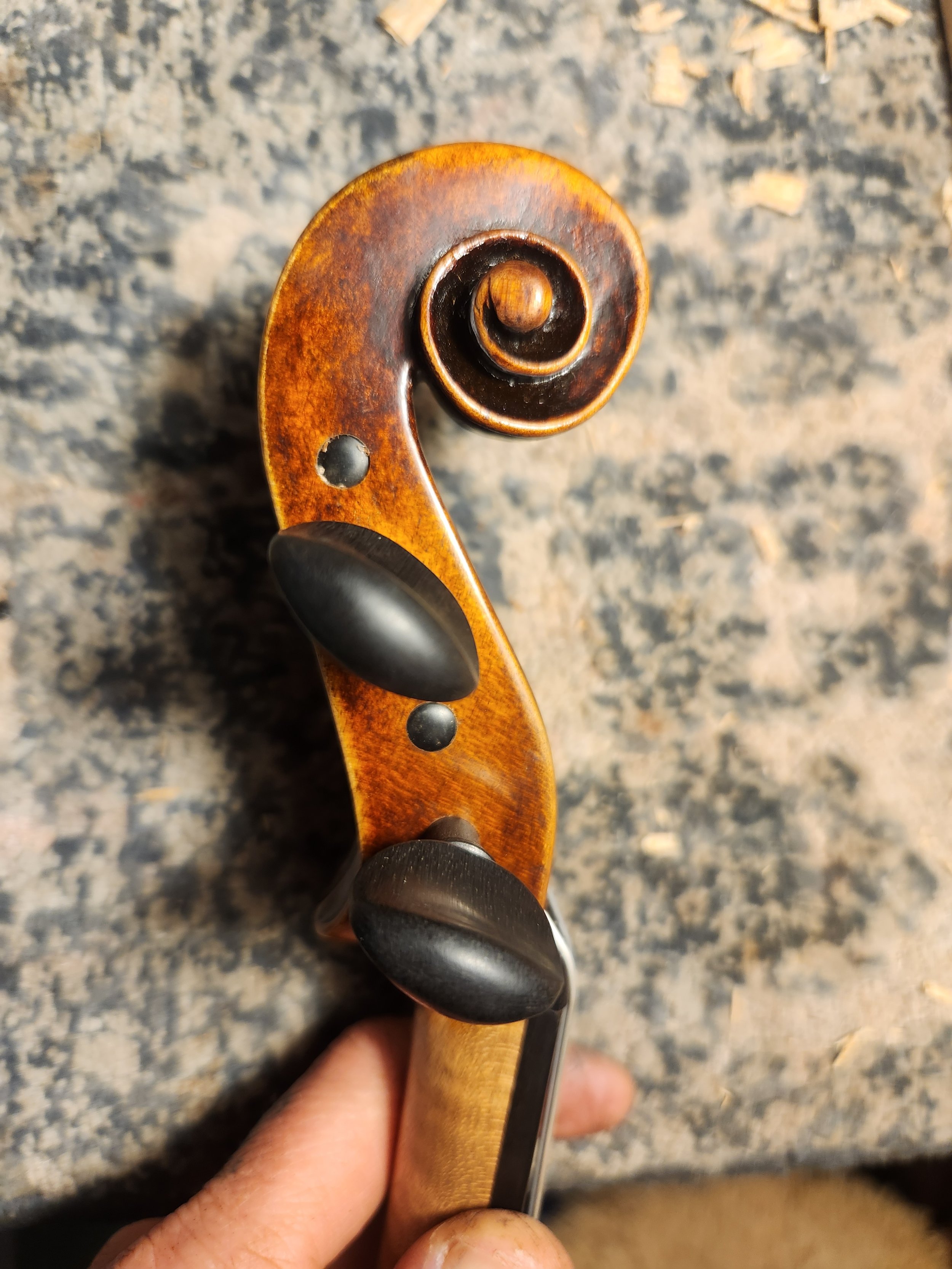
Scroll graft on a 18th Century Markneukirchen violin
This fine antique violin belonged to my client’s father, a professional concert musician and violin teacher.
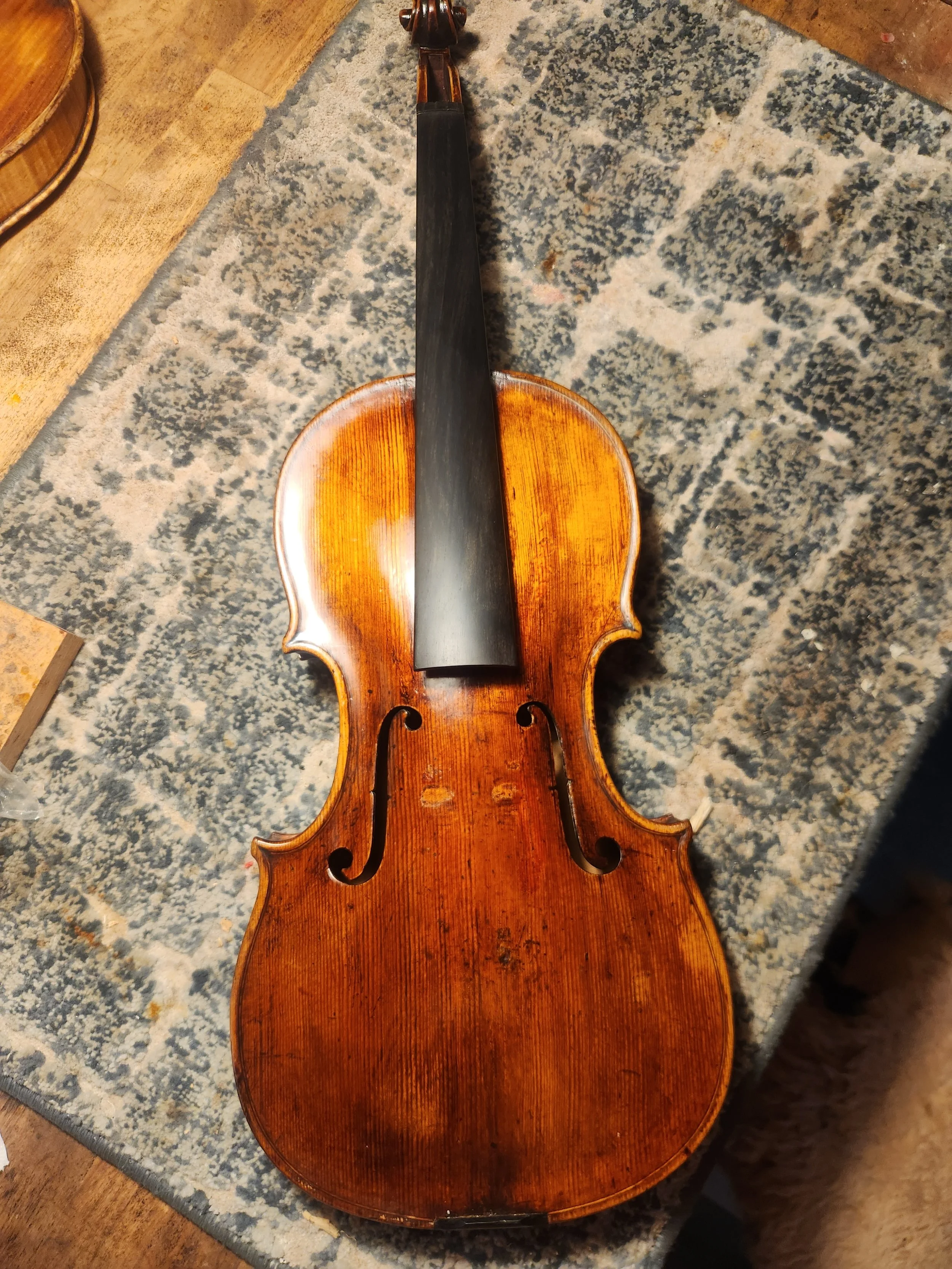
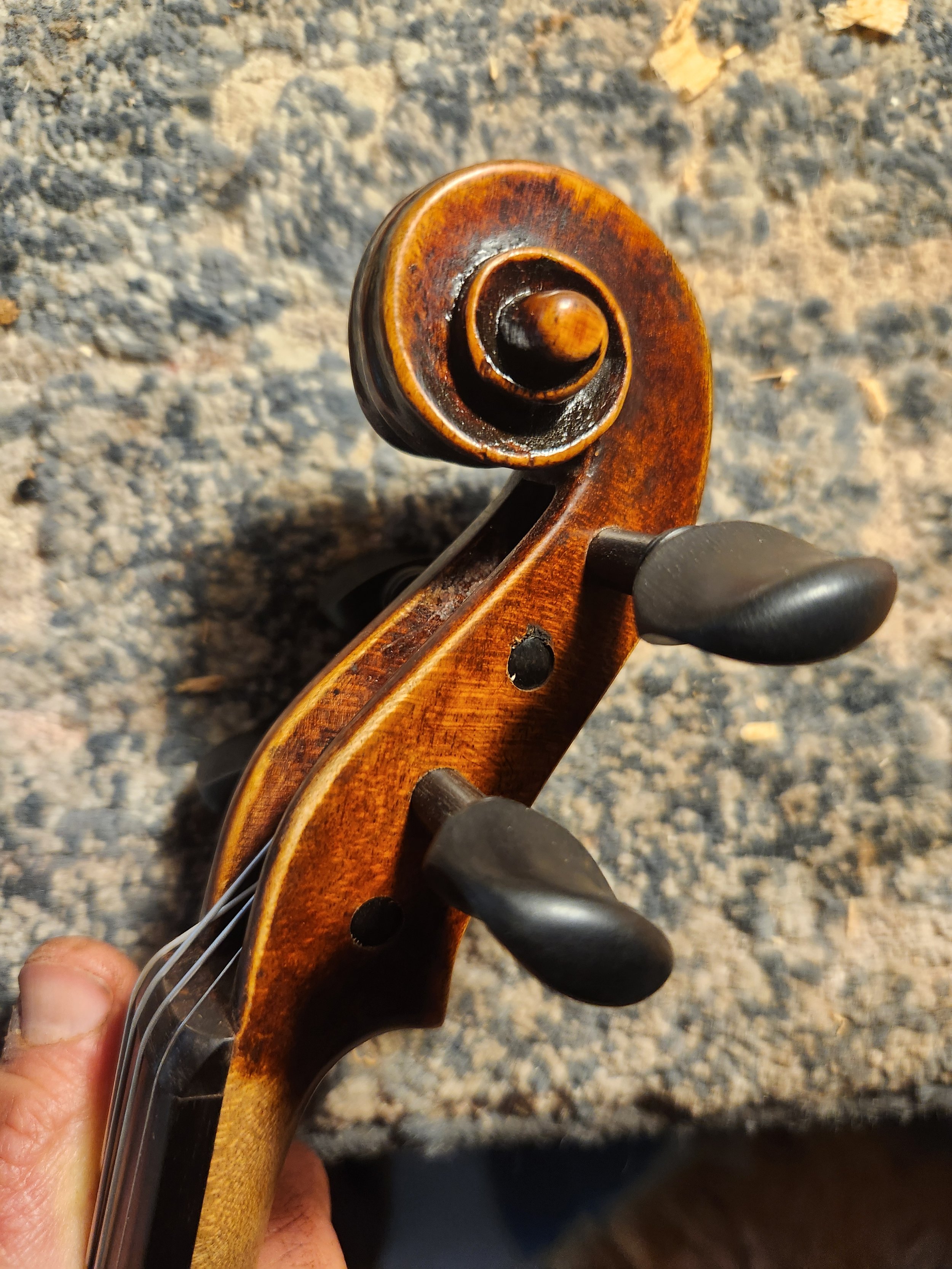
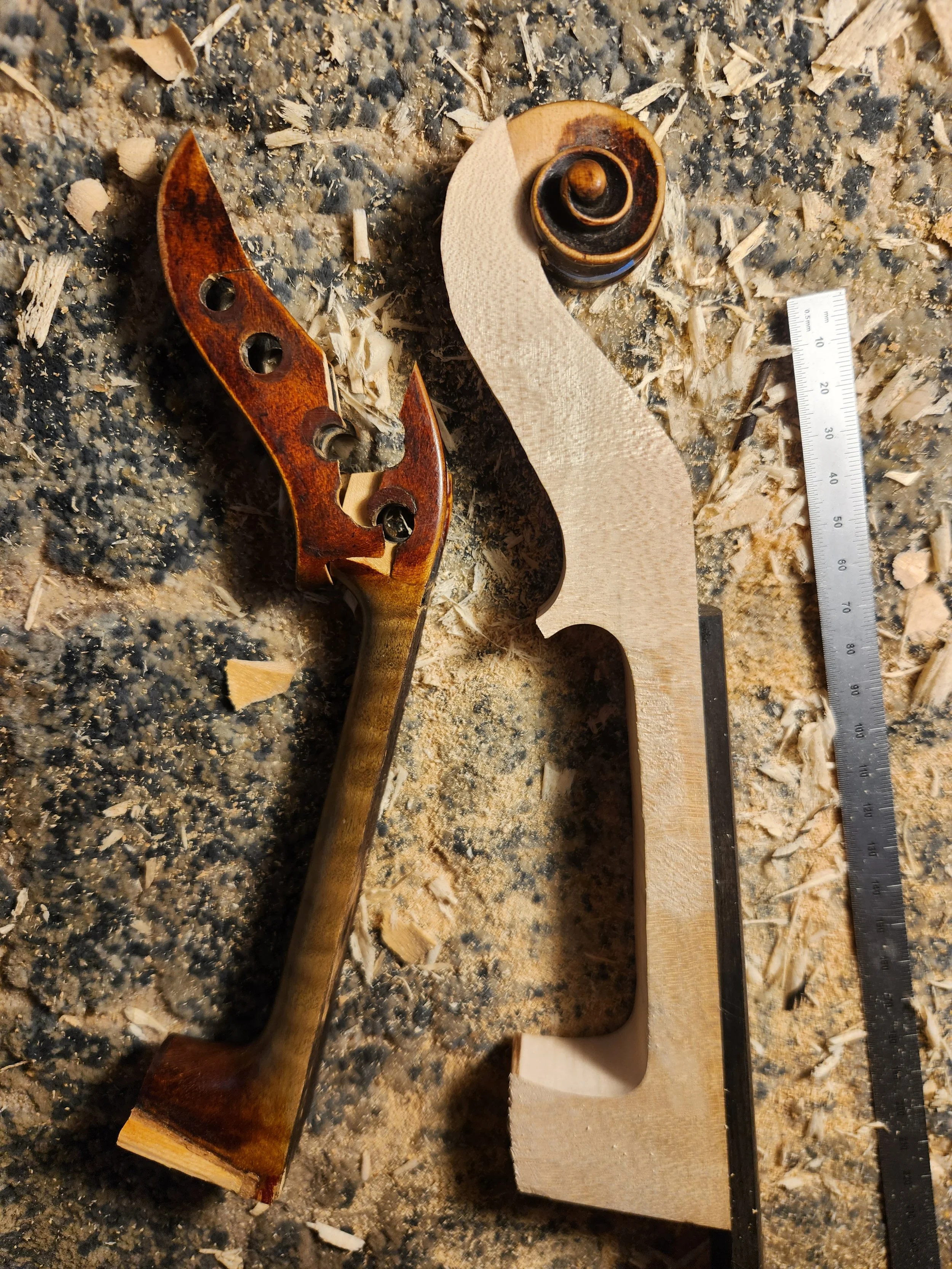
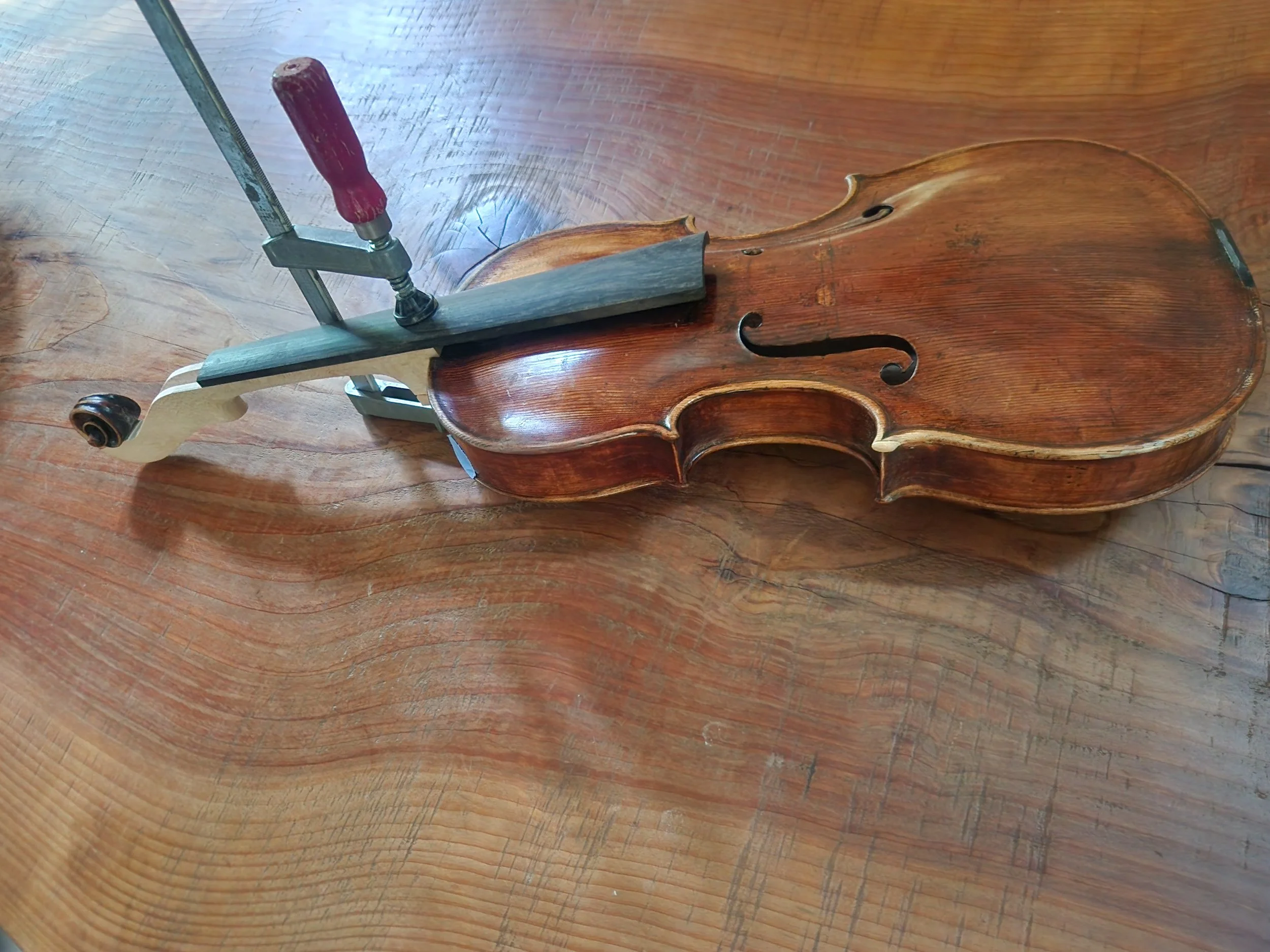
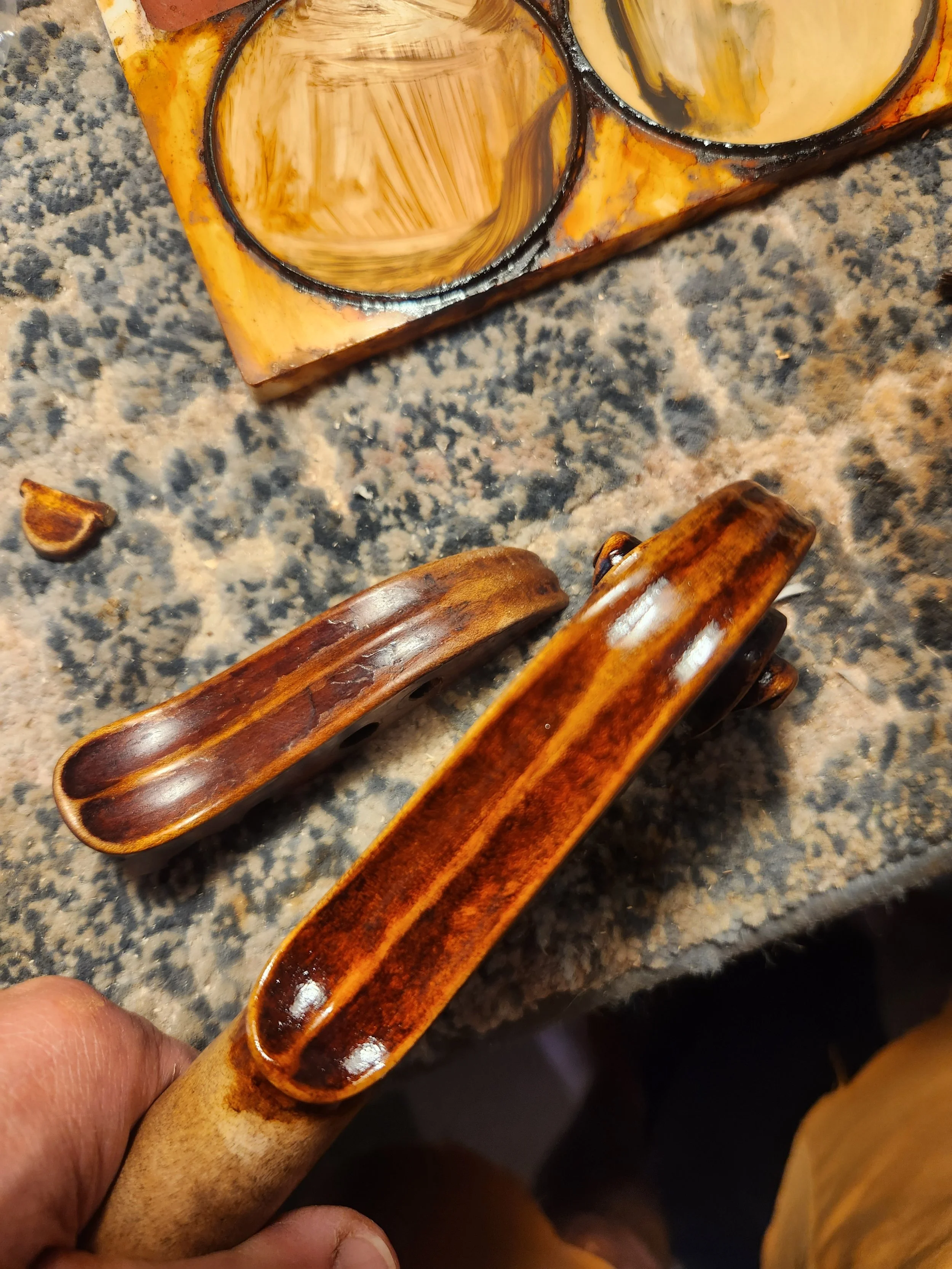
When my client began his return to playing violin, he wanted to play his father’s instrument. Unfortunately, there were substantial repairs and restoration needed before it could be strung up again. The violin had had a neck graft performed some time ago, a procedure wherein the old neck is removed and the pegbox and scroll are grafted on to a new neck. This graft had failed both at the joints for the neck graft as well as cracks that had formed in the pegbox where the peg holes had been bushed in the past. The entire pegbox was in pieces. To solve these problems, I made an entirely new neck and pegbox, in the style of the original maker, and grafted his original scroll onto the new neck. This way, the maker’s signature scroll work is preserved, and the functionality of the instrument is returned.
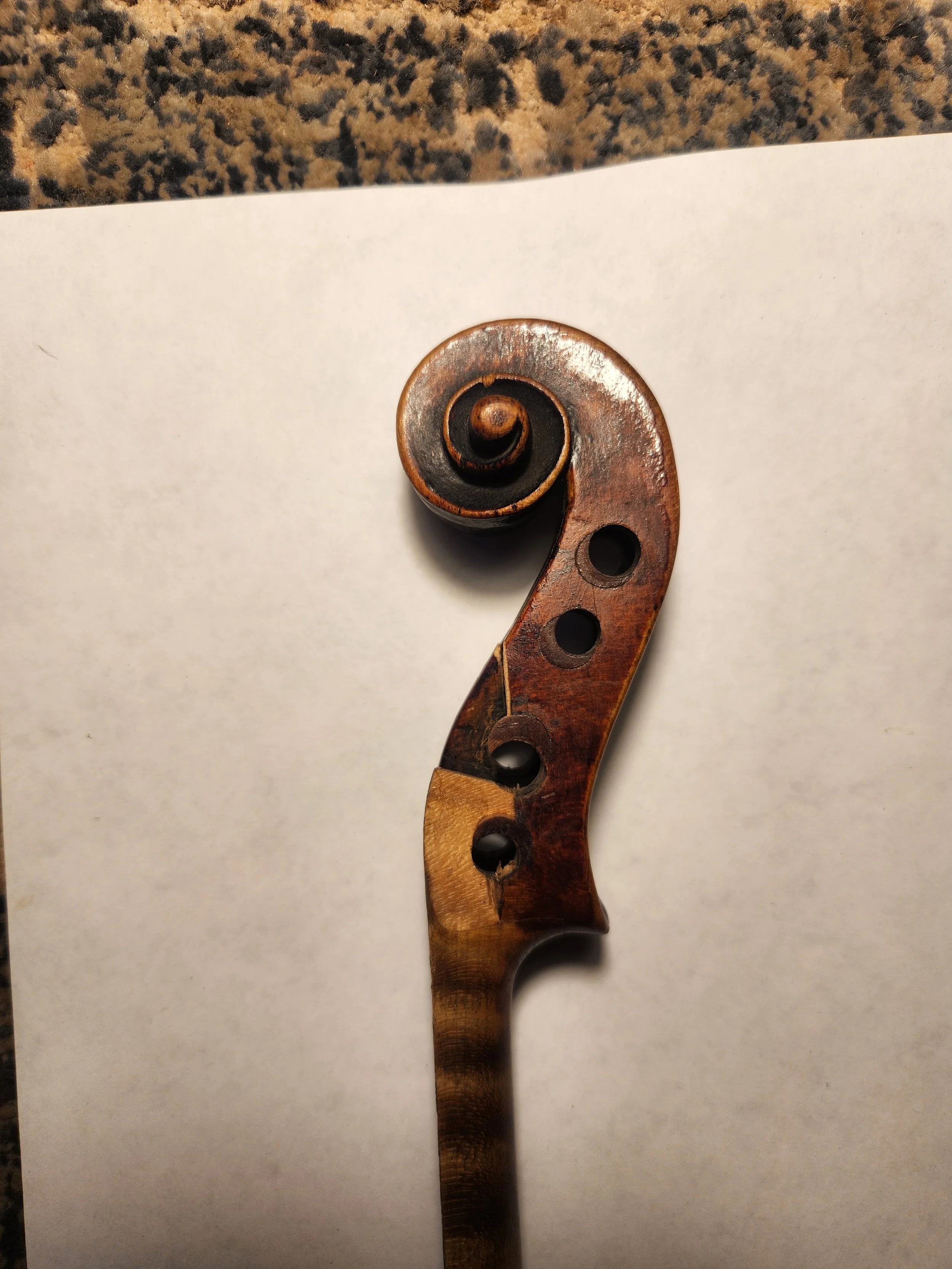
The original broken pegbox.
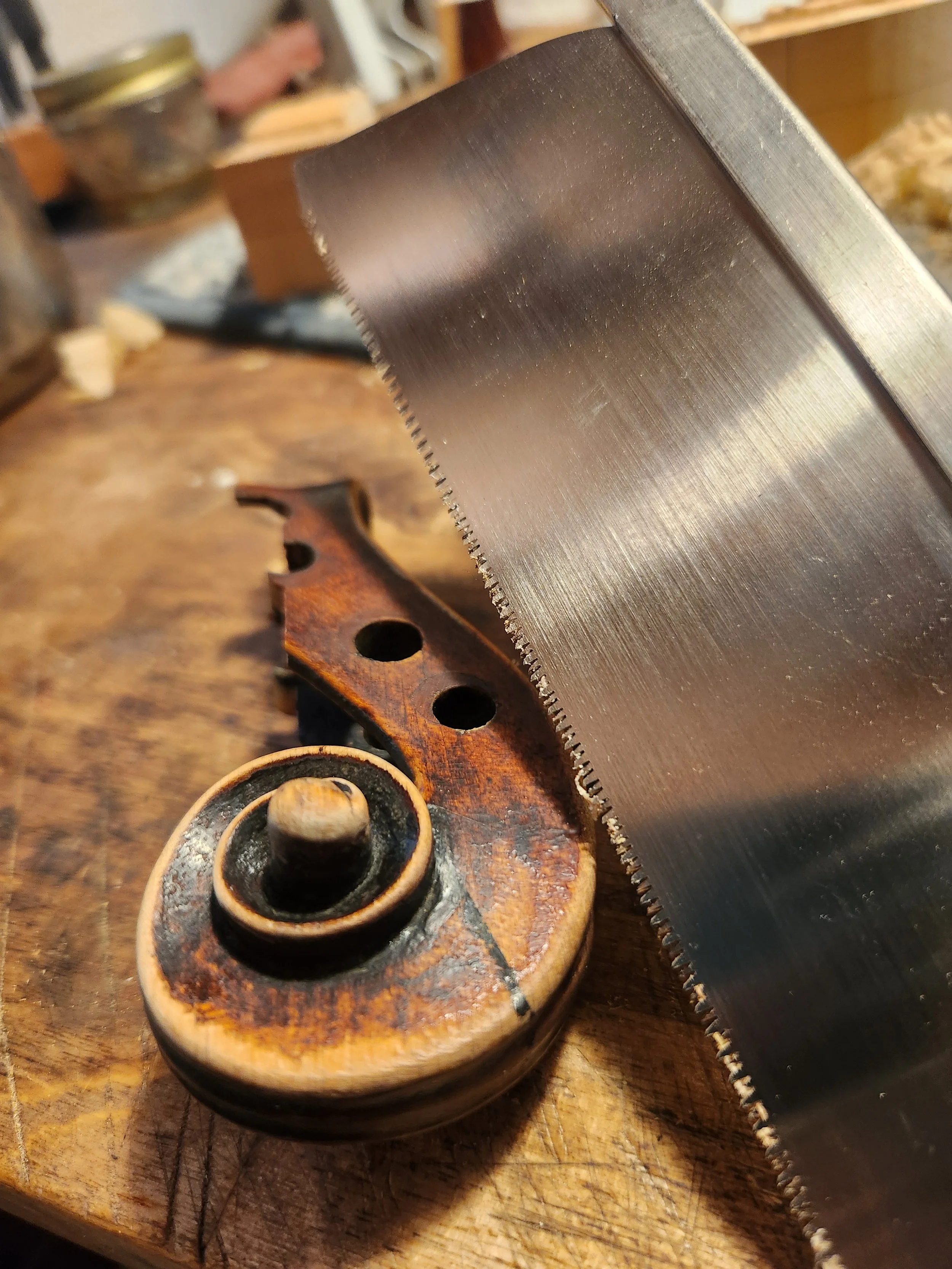
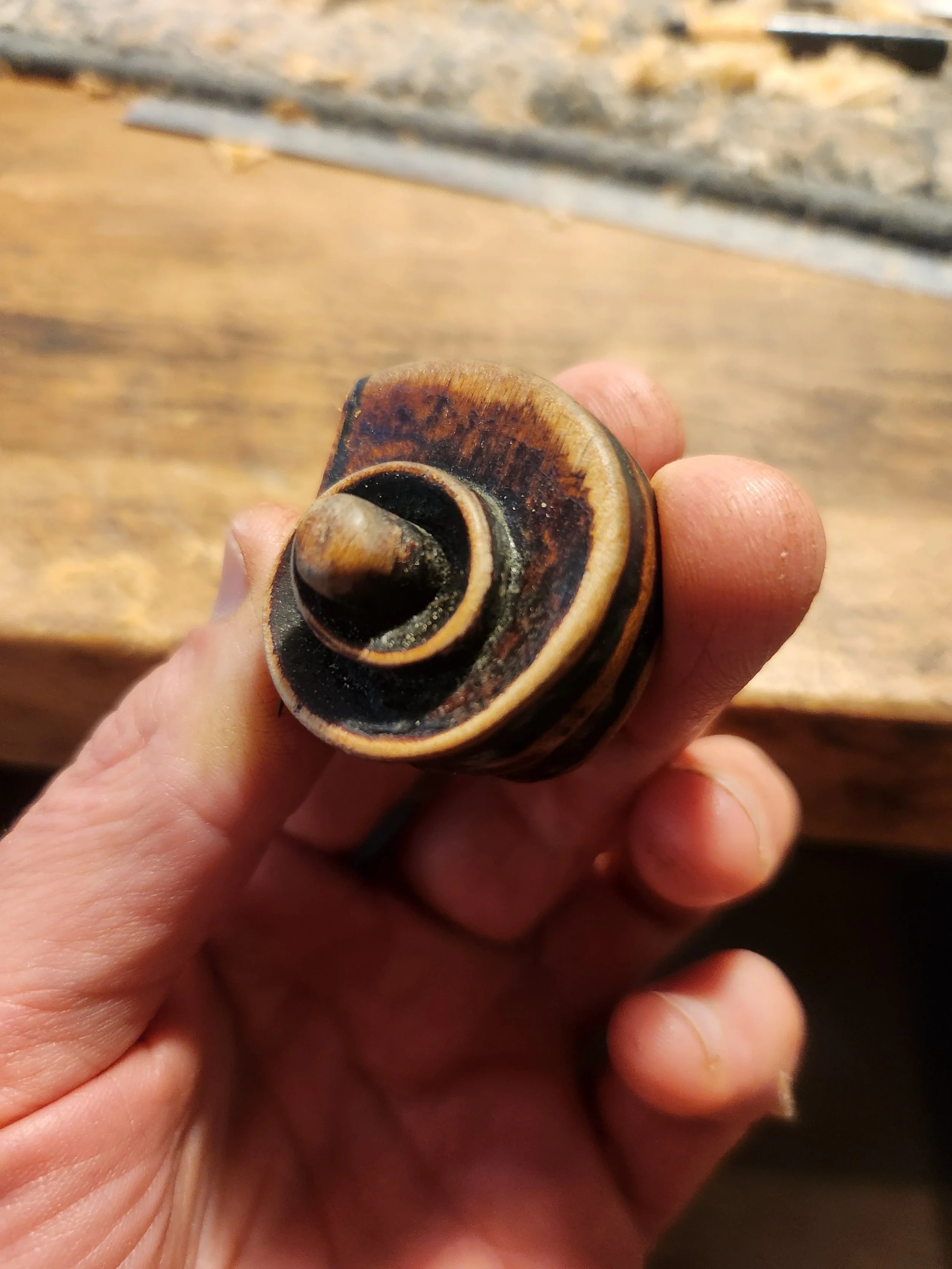
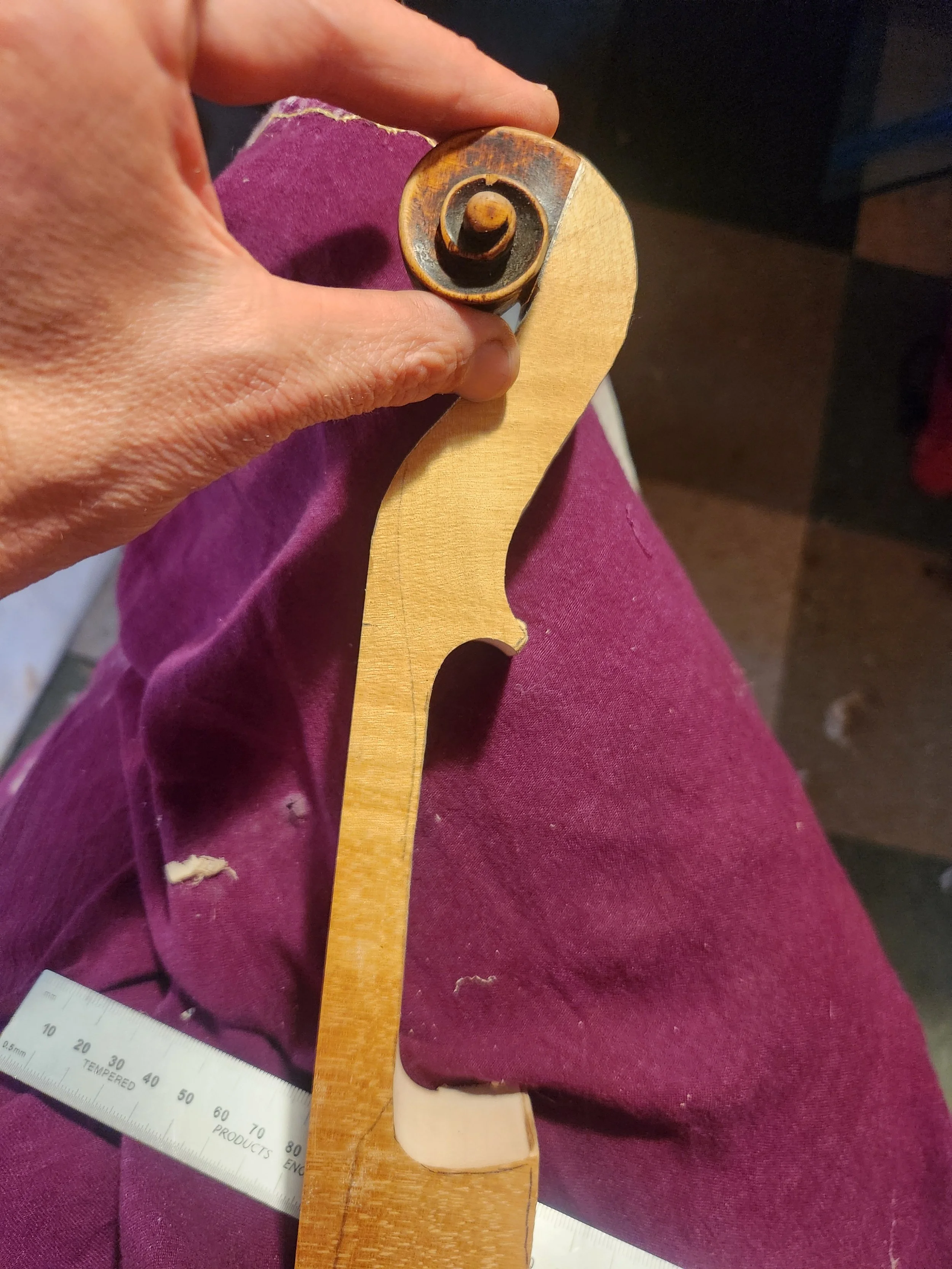
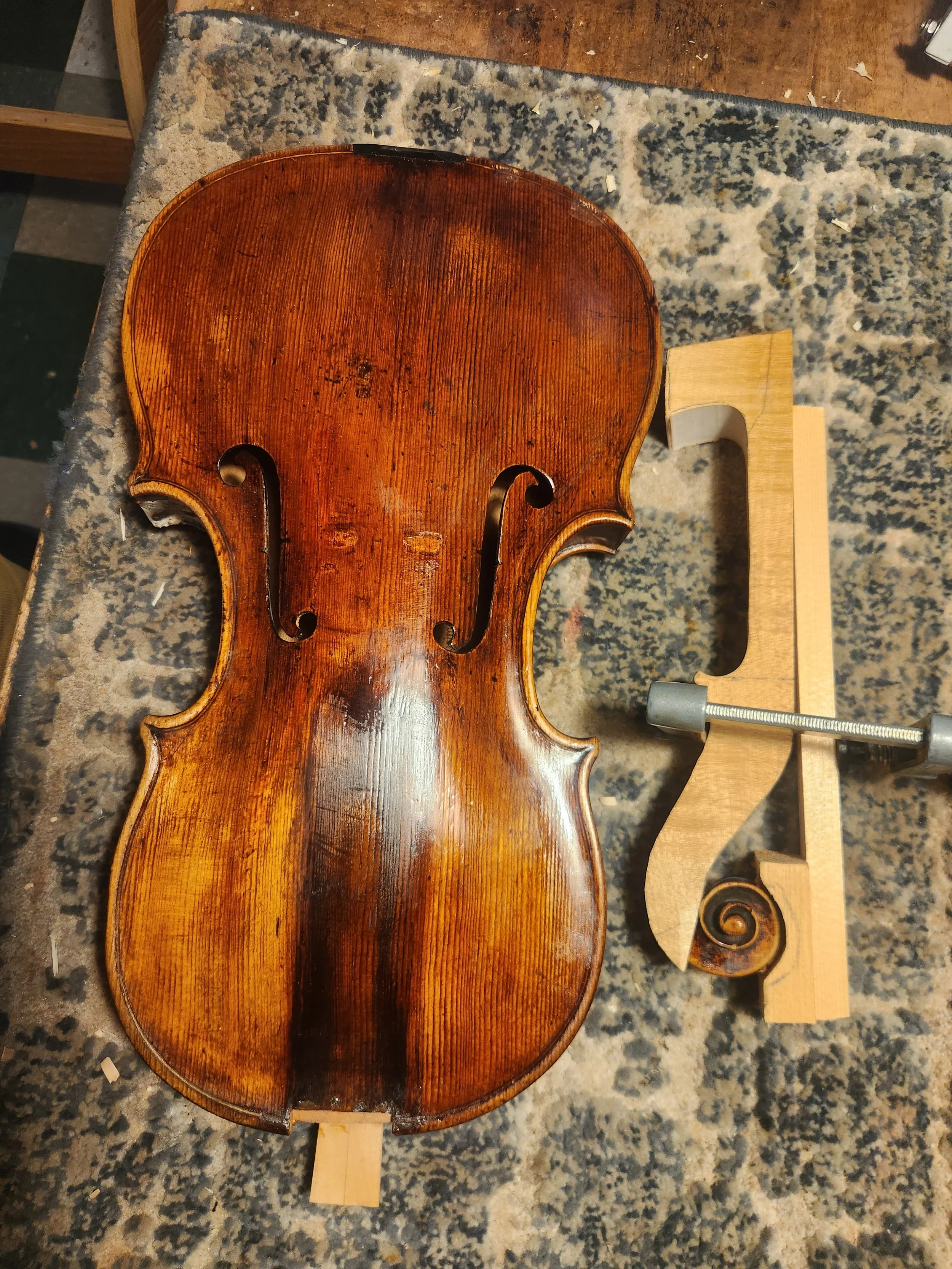
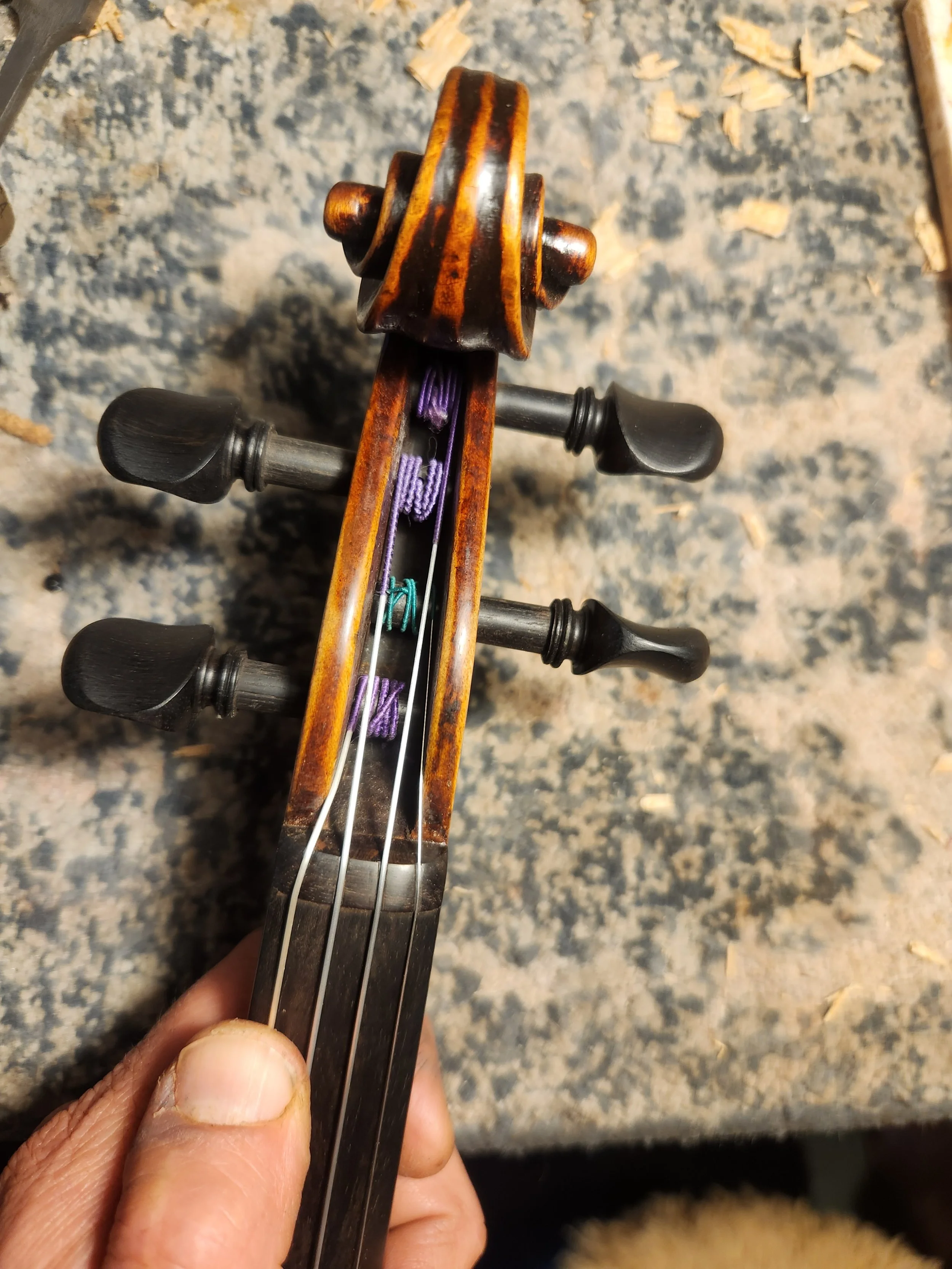
Years ago, I had visited Florence, and I bought a wonderful piece of European maple with a very plain figure from a violin shop that I visited when I was just an apprentice learning about violinmaking. I’ve been using this amazing piece of wood for 20-some years now, because it is such a perfect match for many repairs, especially for necks, because of it’s plain-ness and old seasoned age. I used a piece of this wood to make a new neck, painstakingly copying the unique and unusual shape of the original pegbox, and grafted on the original scroll.
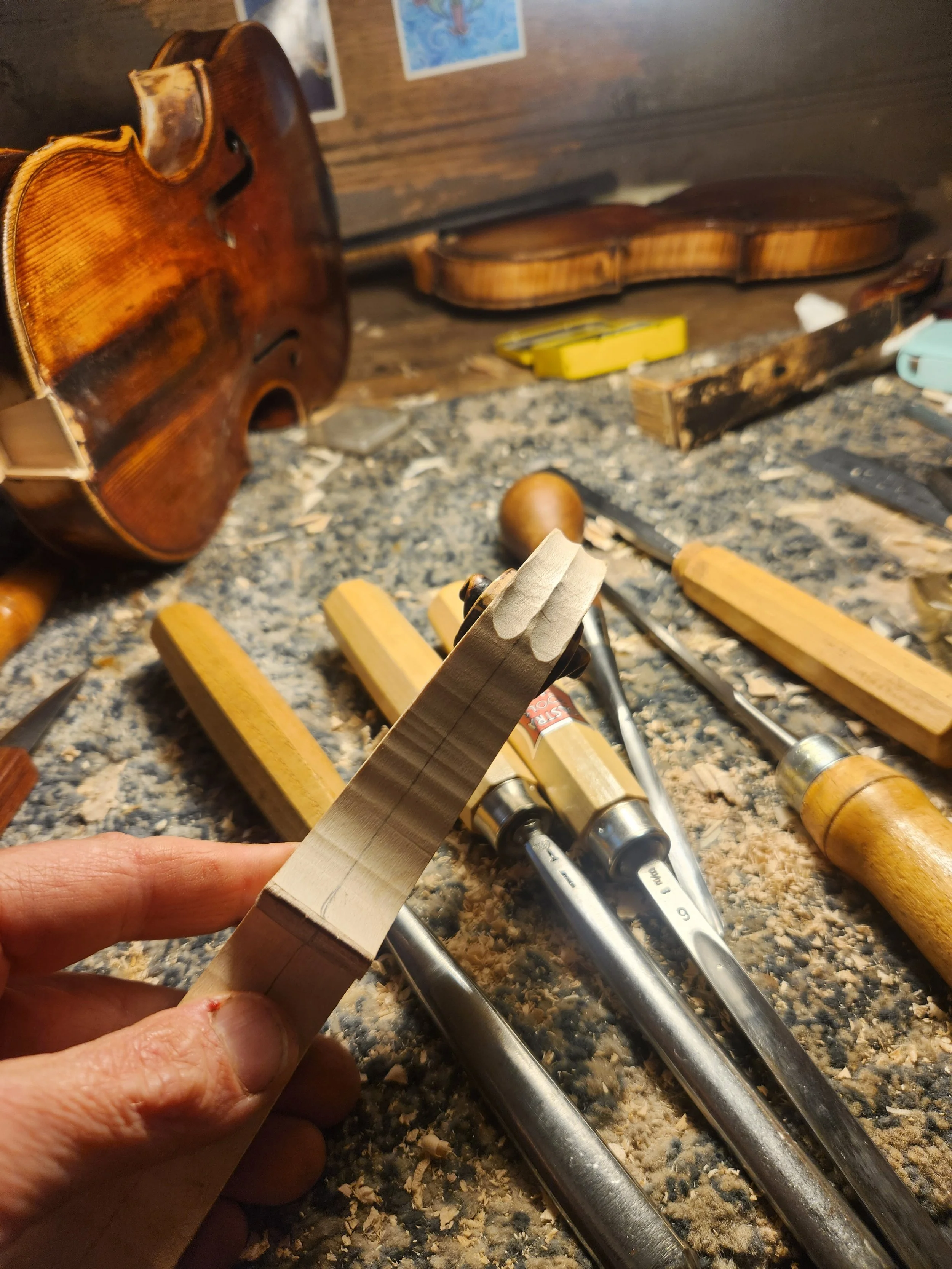
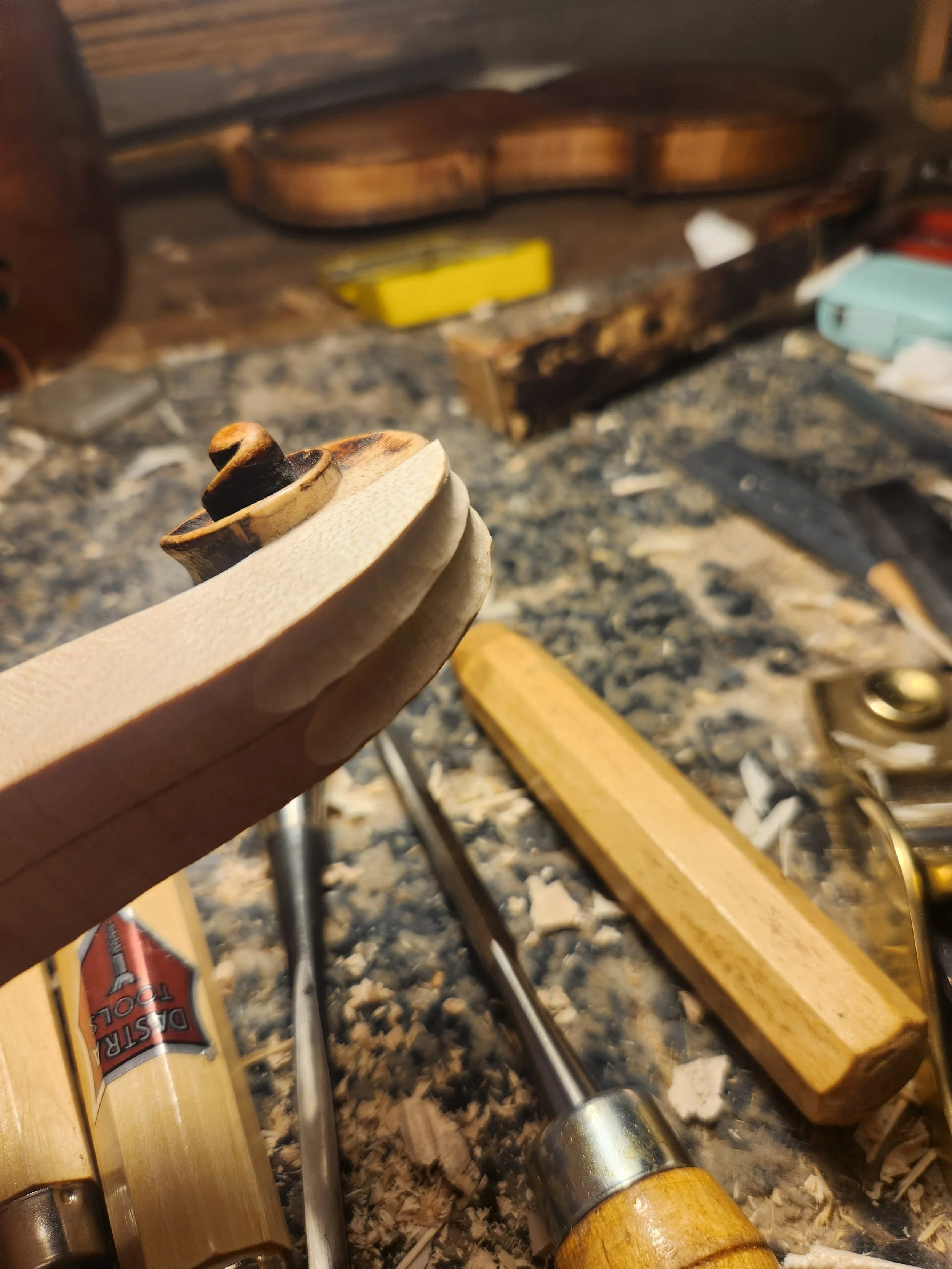
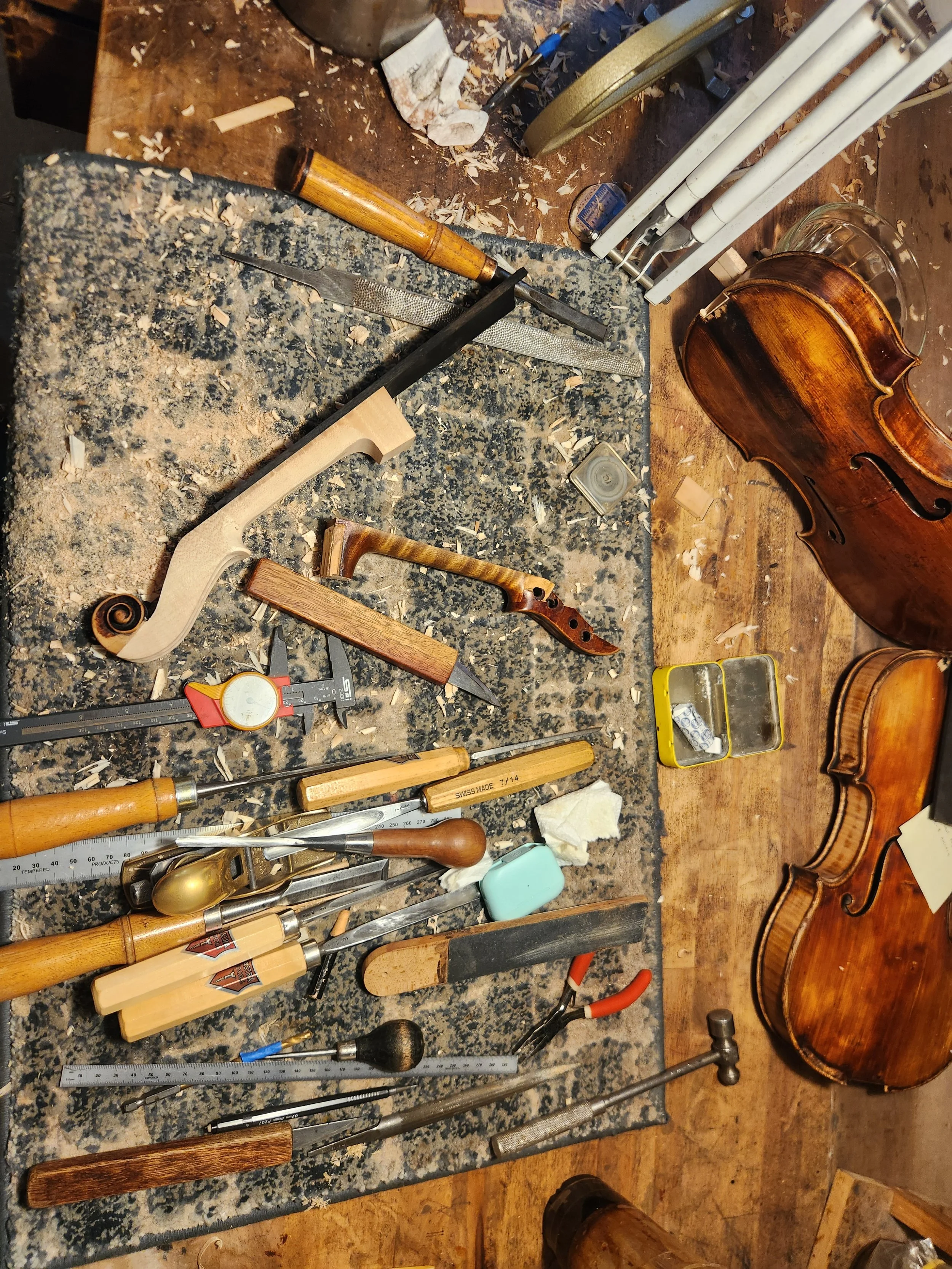
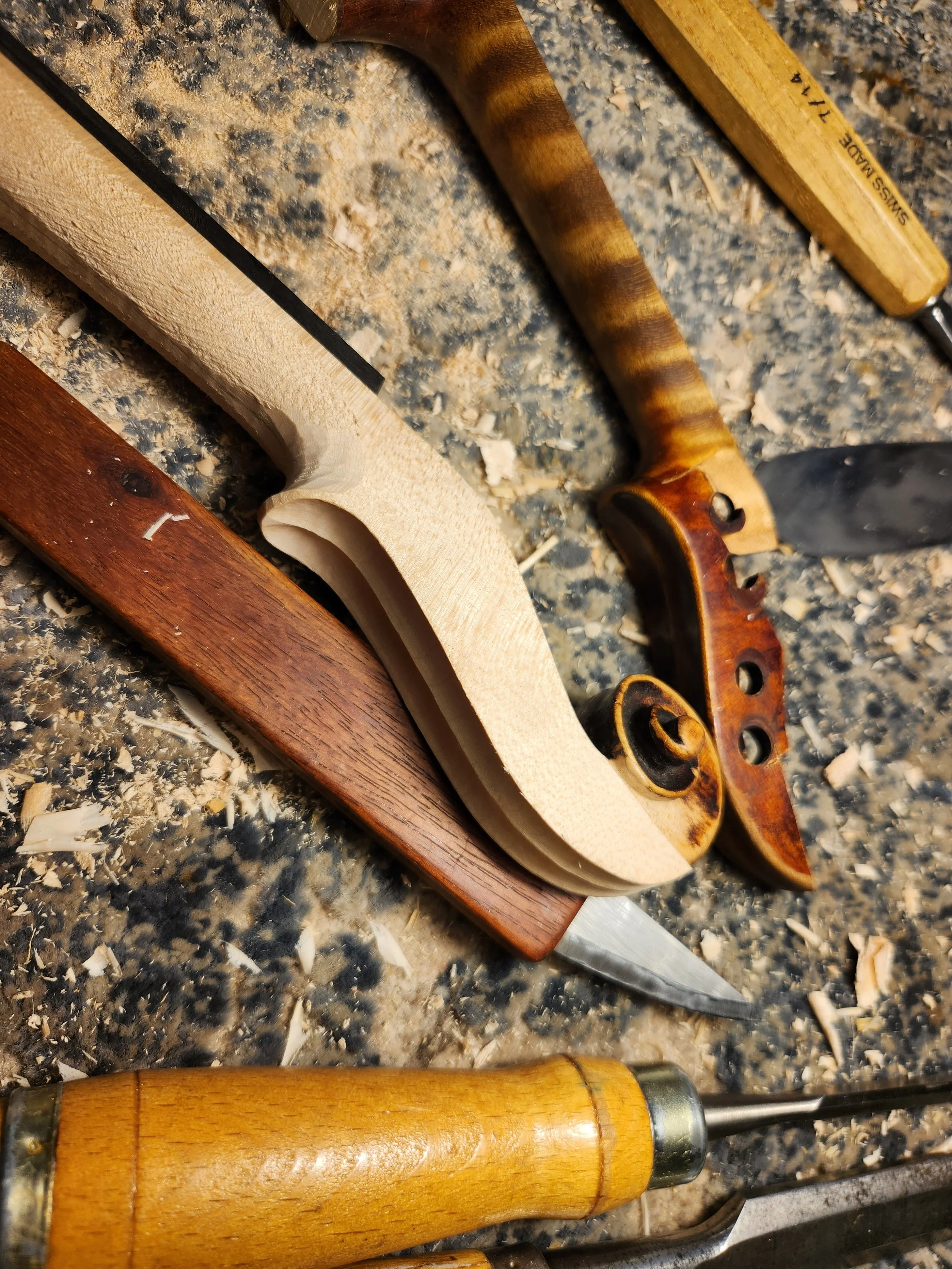
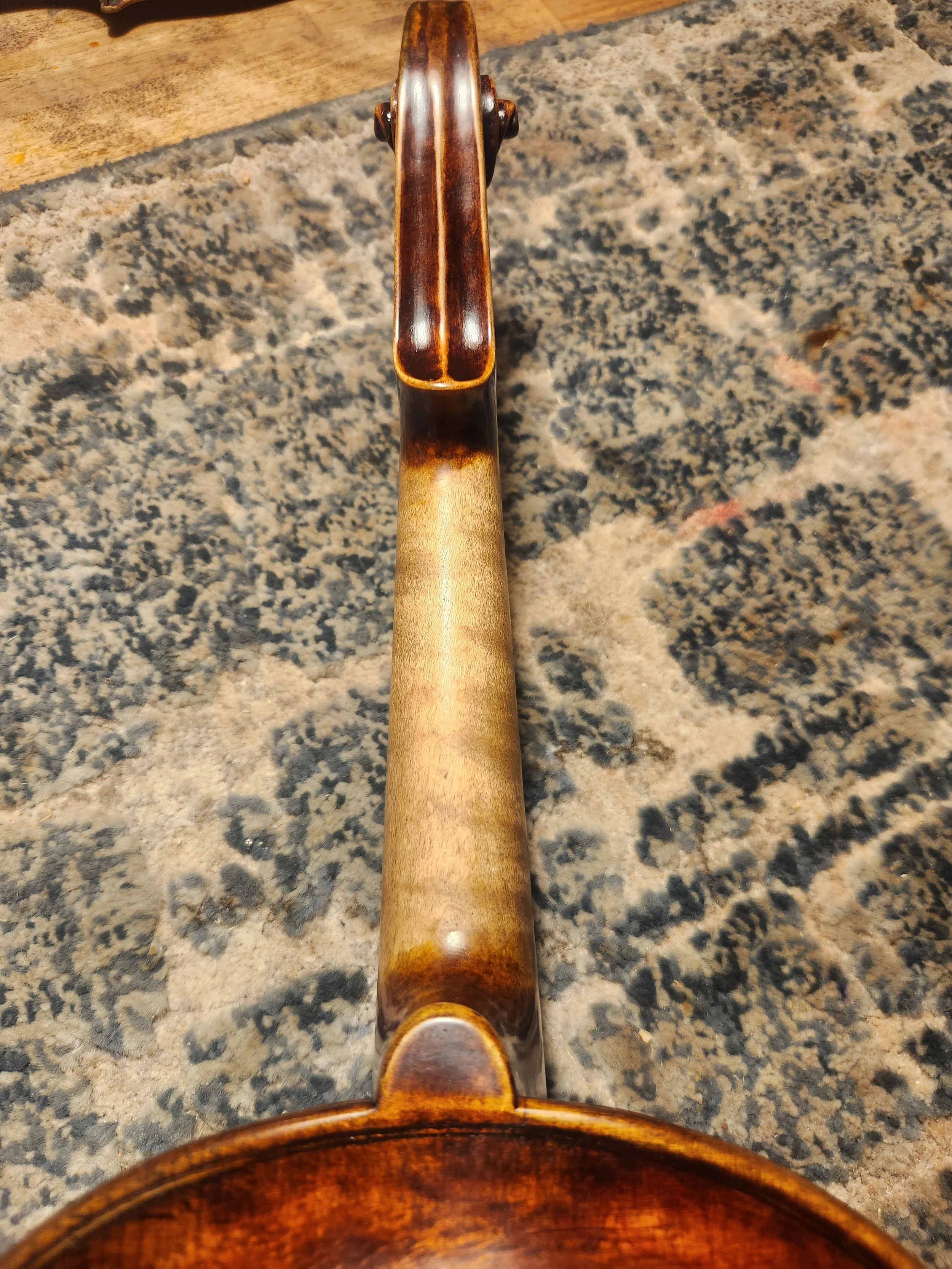
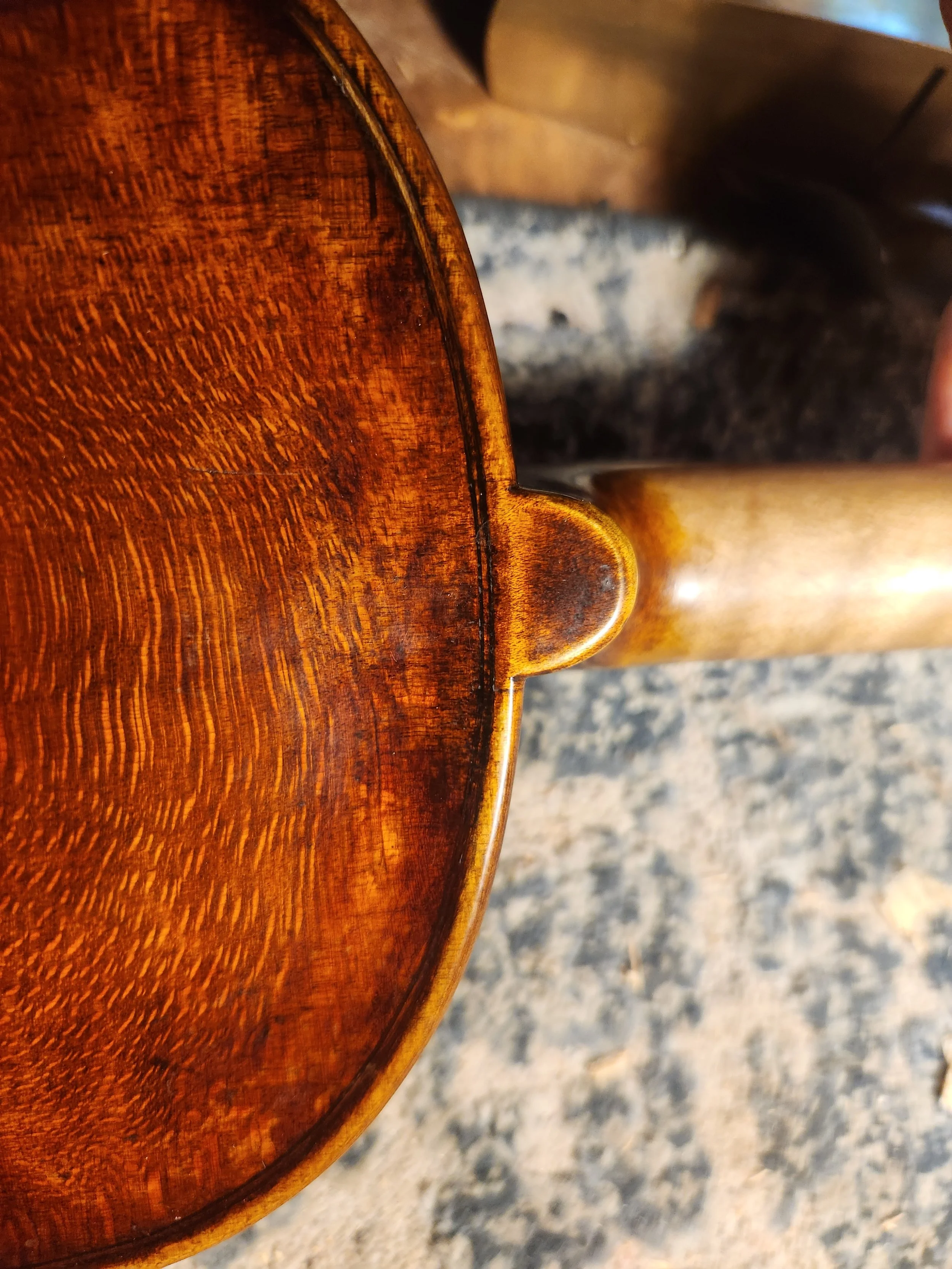
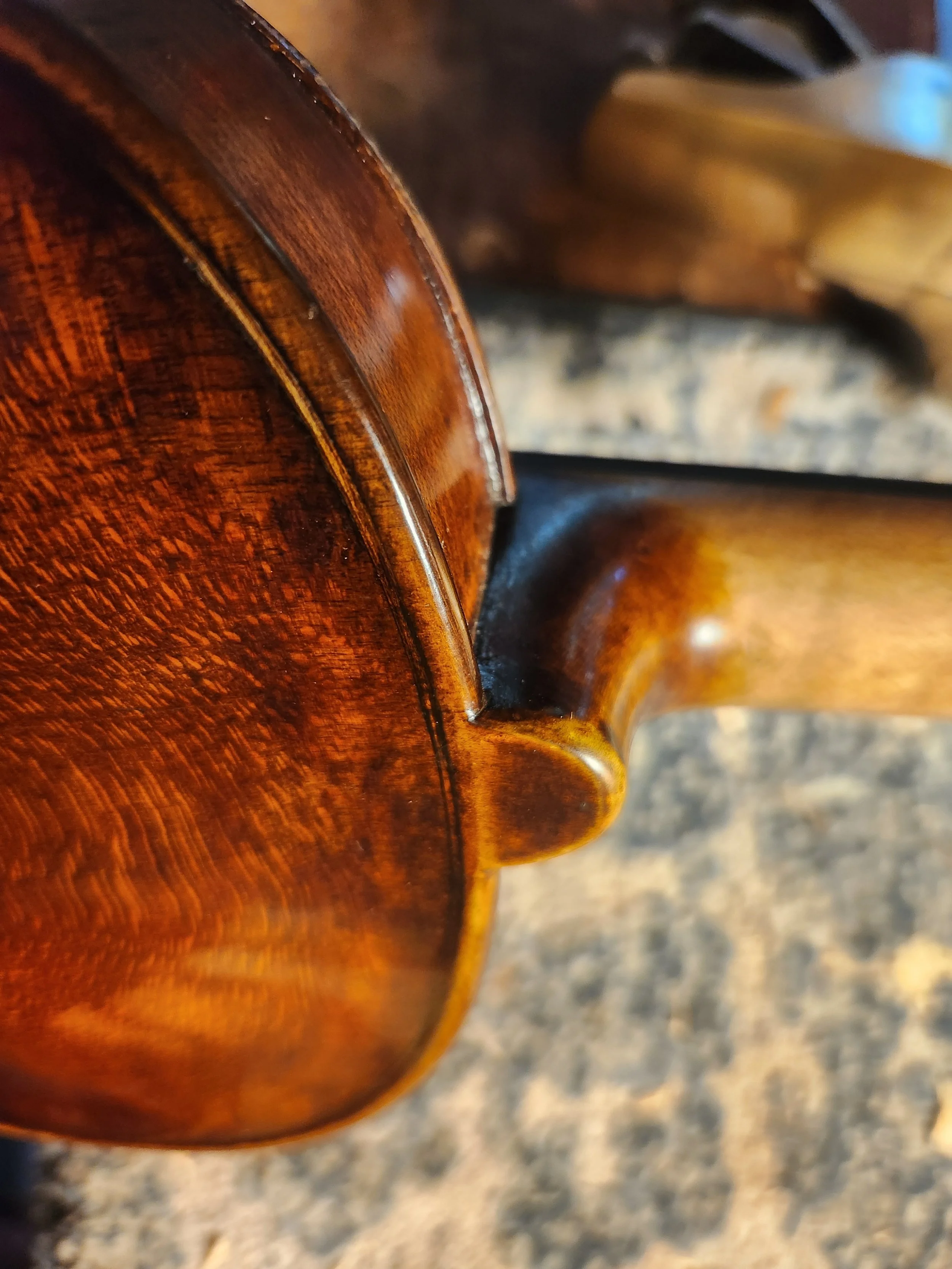
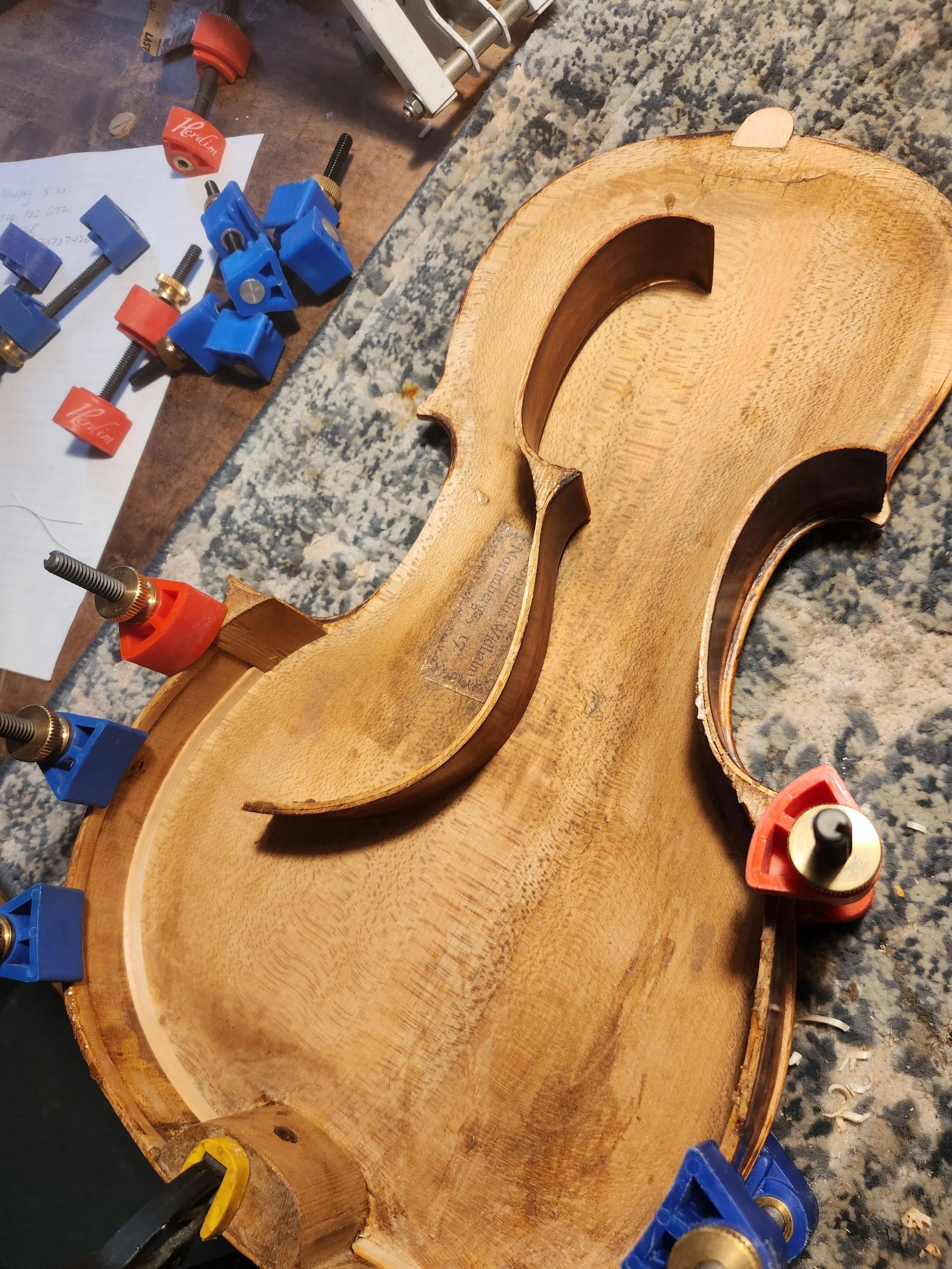
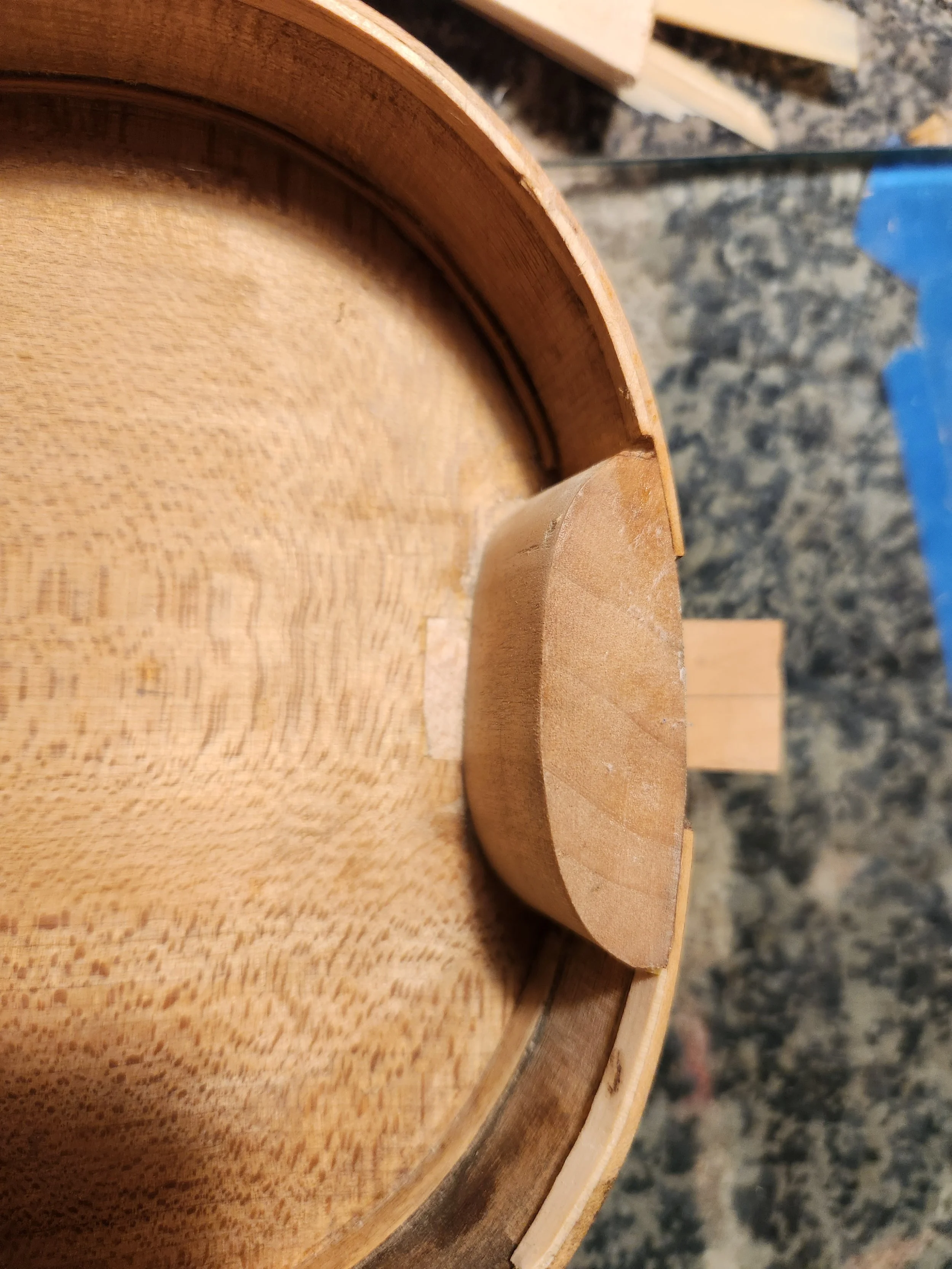
Additionally, at some time in the past, the button at the back of the neck mortise had been broken off the back plate of the instrument. I grafted a new button on, and made a whole new upper block into which I would fit the new neck. While the top was off the instrument, all the interior seams were cleaned of old crusty glue, restoring a good fit to all the seams. The lower rib was significantly warped from two centuries of chinrests squeezing it, and I restored the shape of the rib. Then, with the top back on, the new neck was glued back into the restored body.
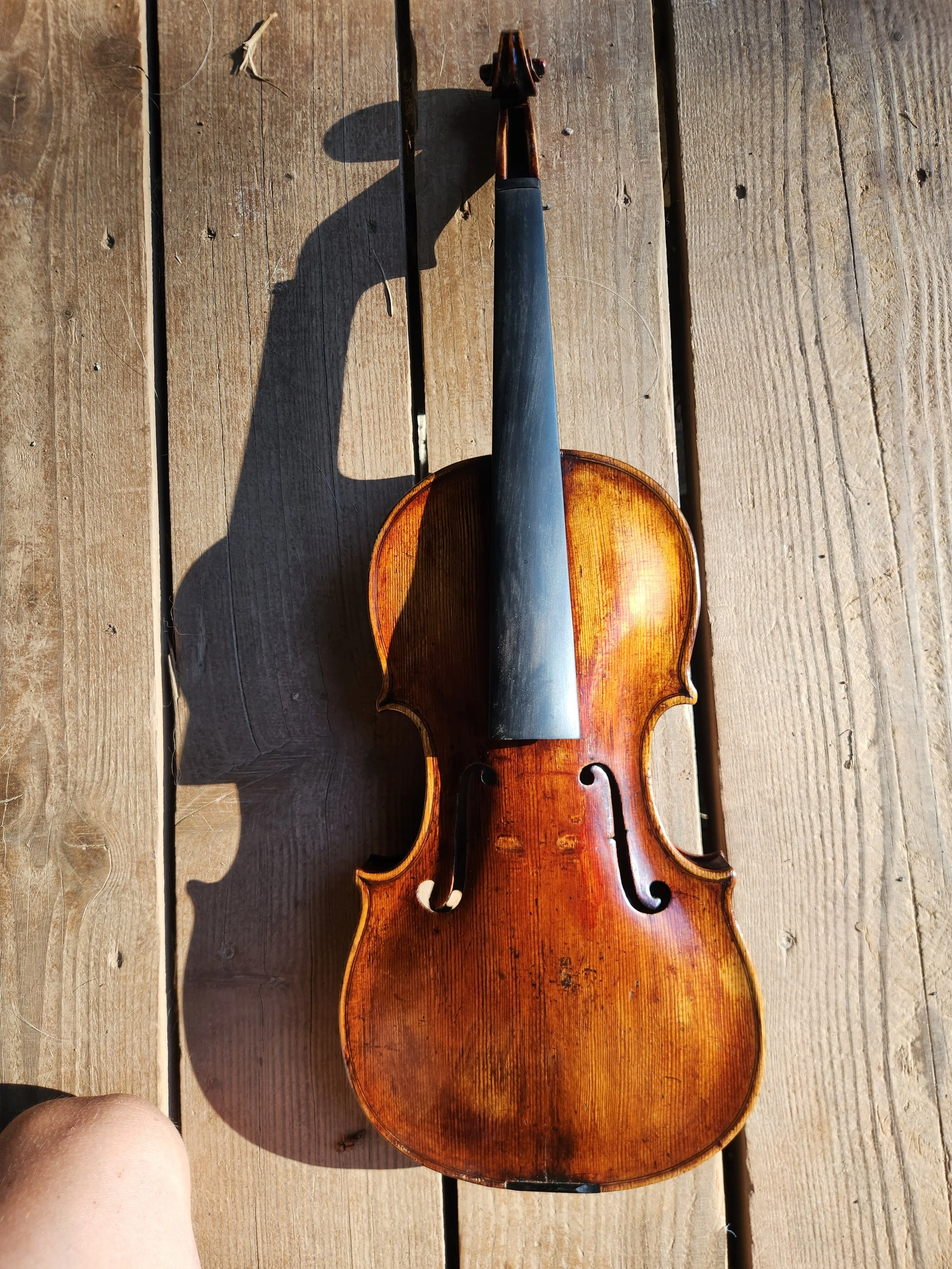
The next step in restoration is to match the original varnish, without removing any of the precious original varnish except as completely necessary. The best wood working in the world will still look wrong if the varnish isn’t matched perfectly. Working side-by-side with the original pegbox, I tried to copy and blend the original and new parts of the old scroll, new pegbox, and new neck.
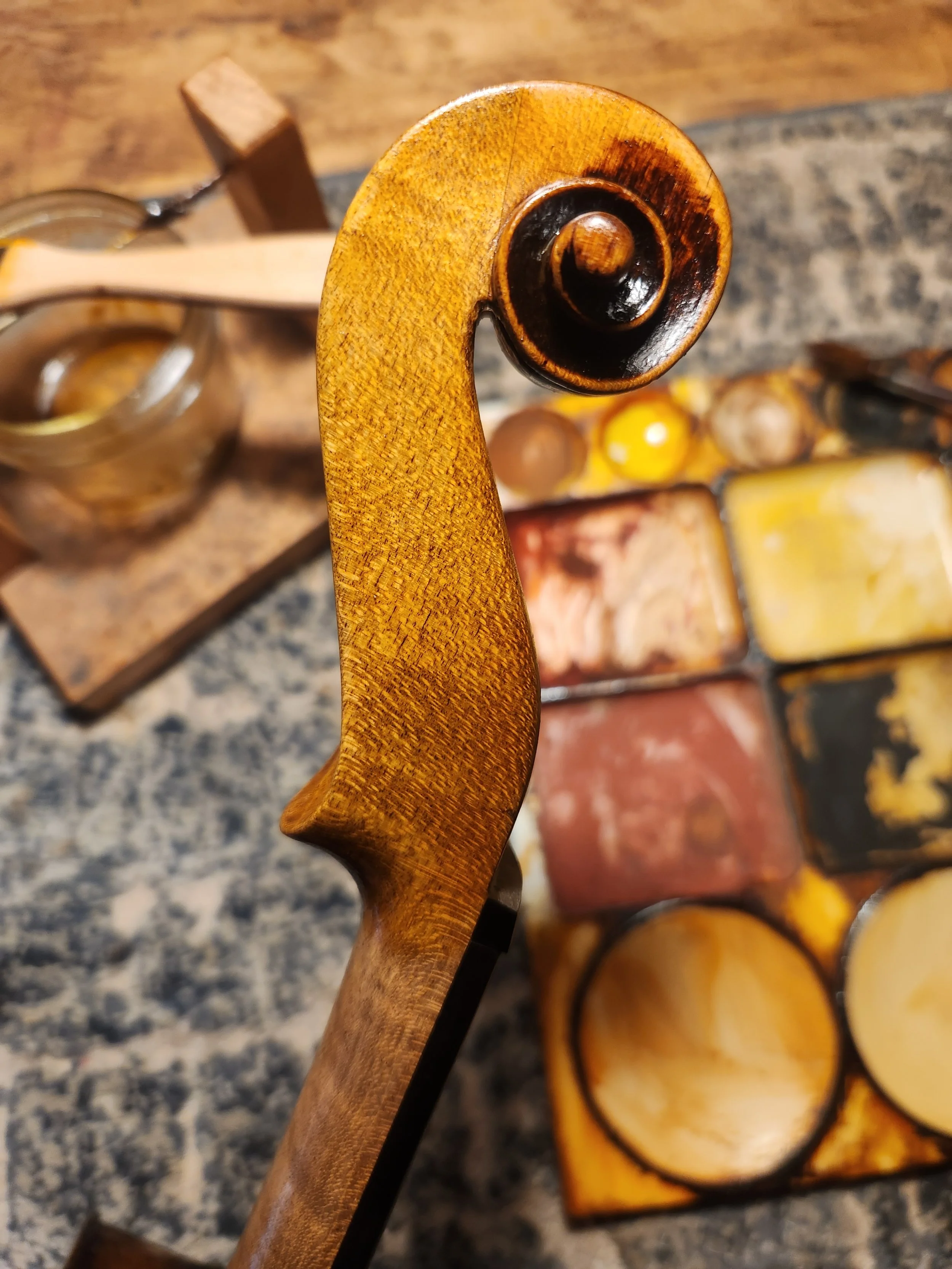
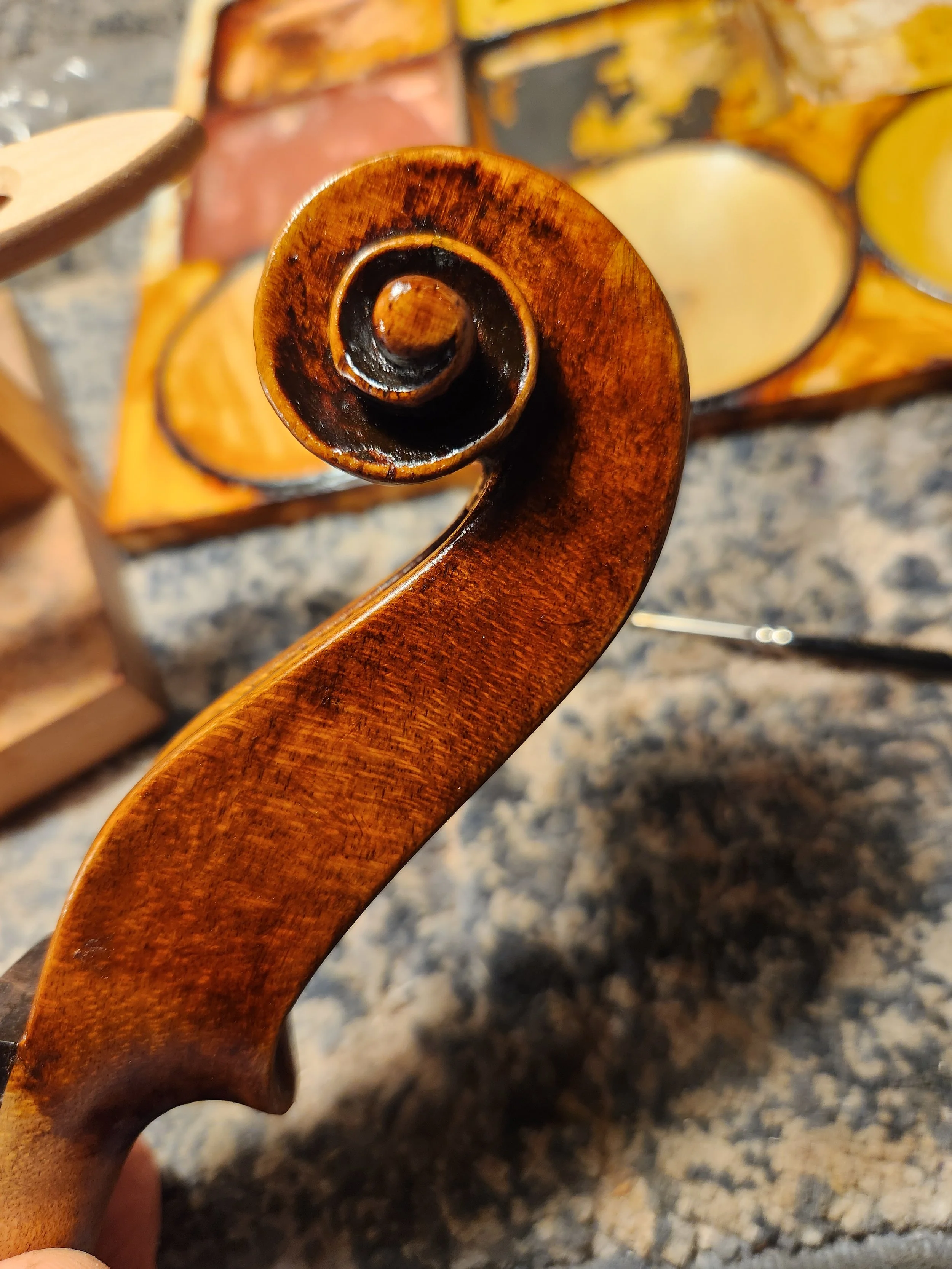
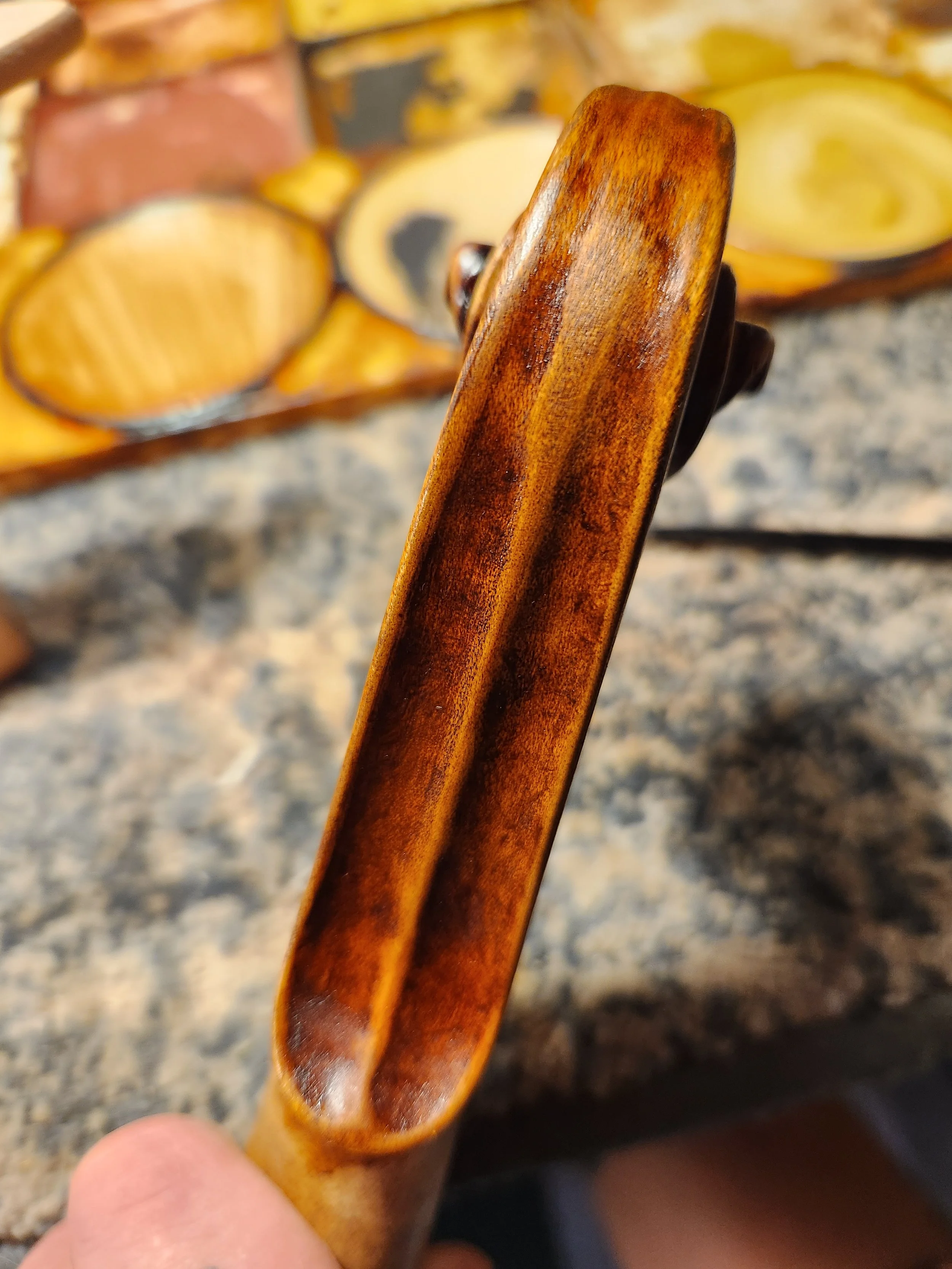
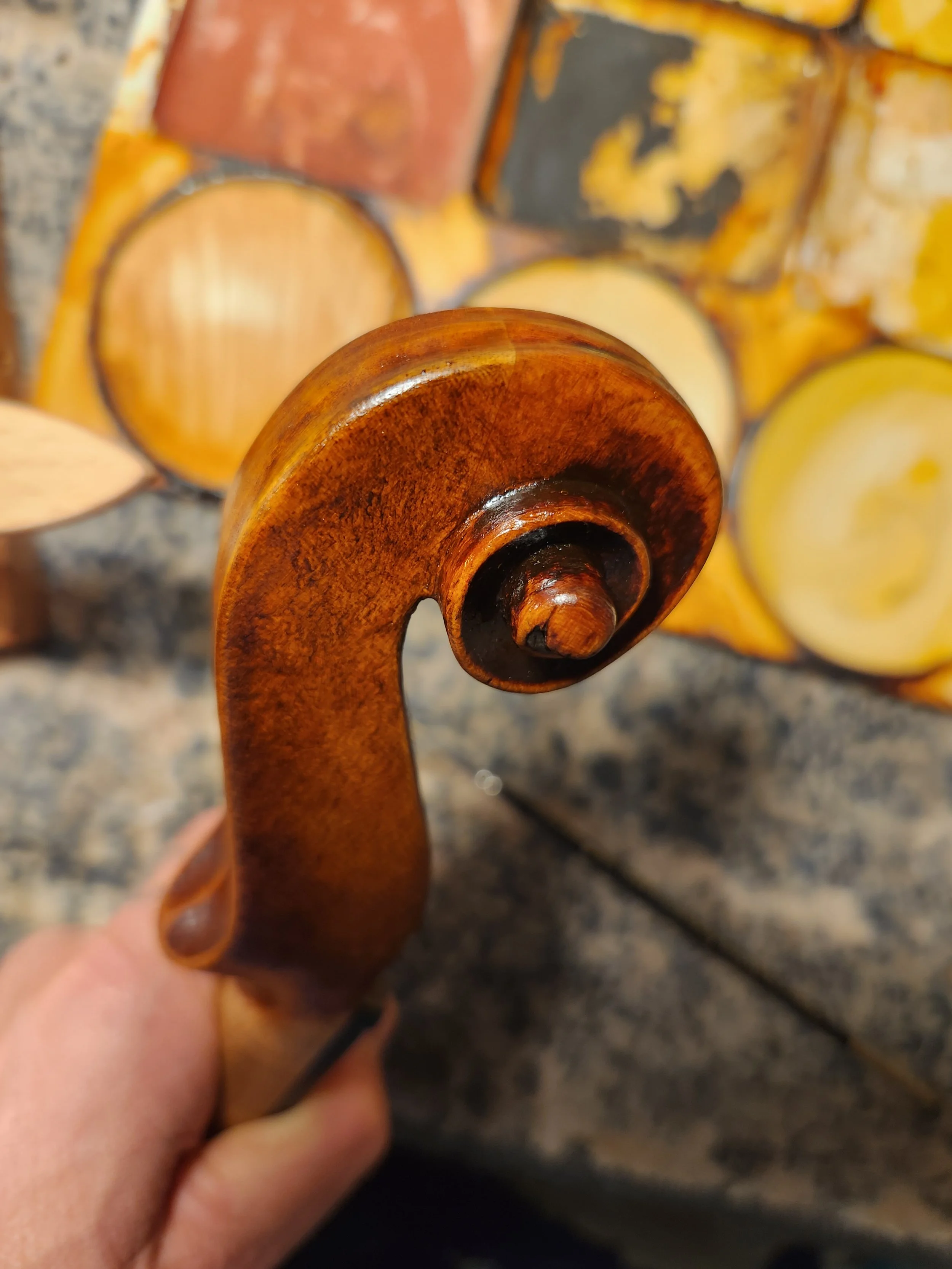
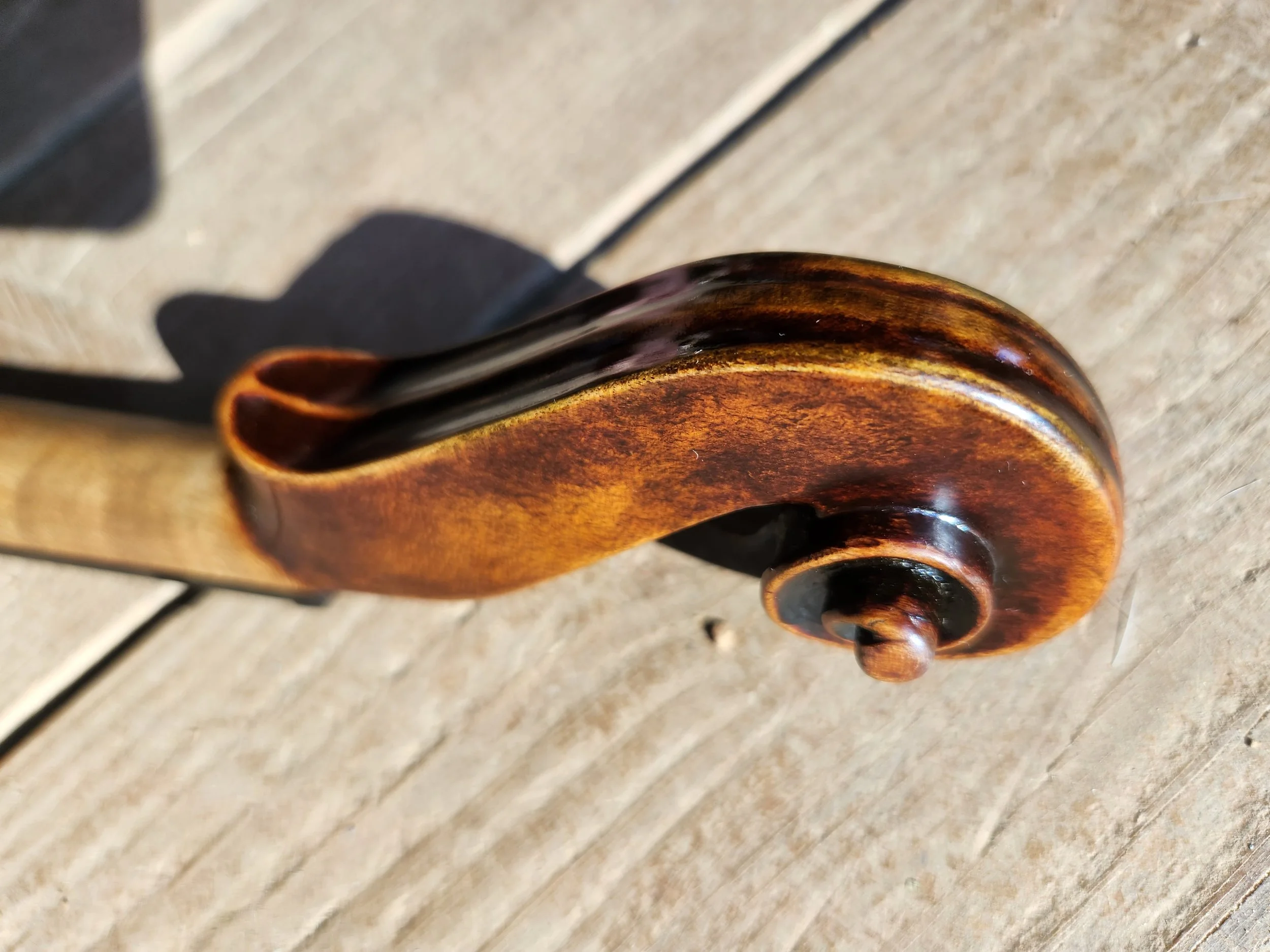
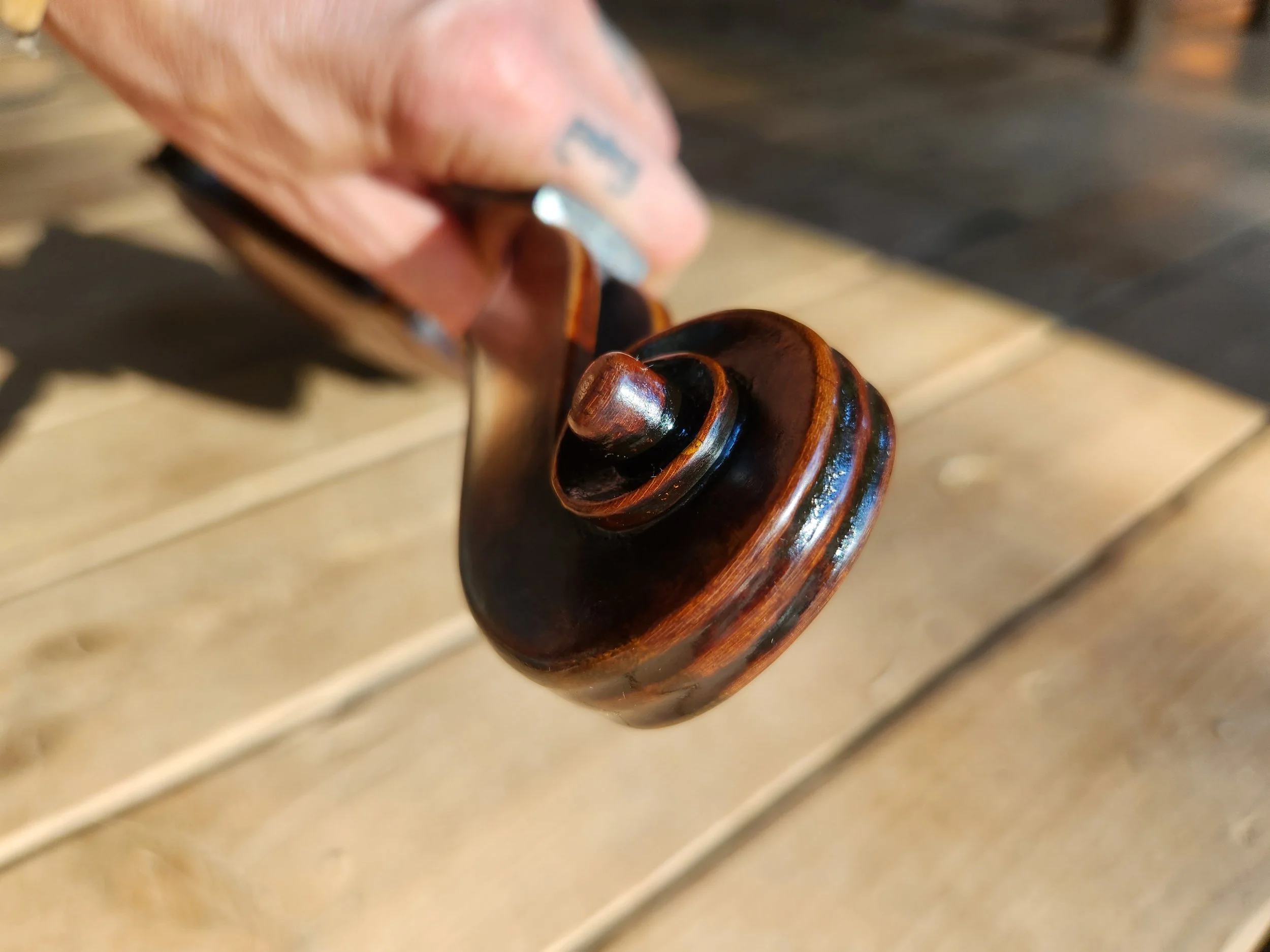
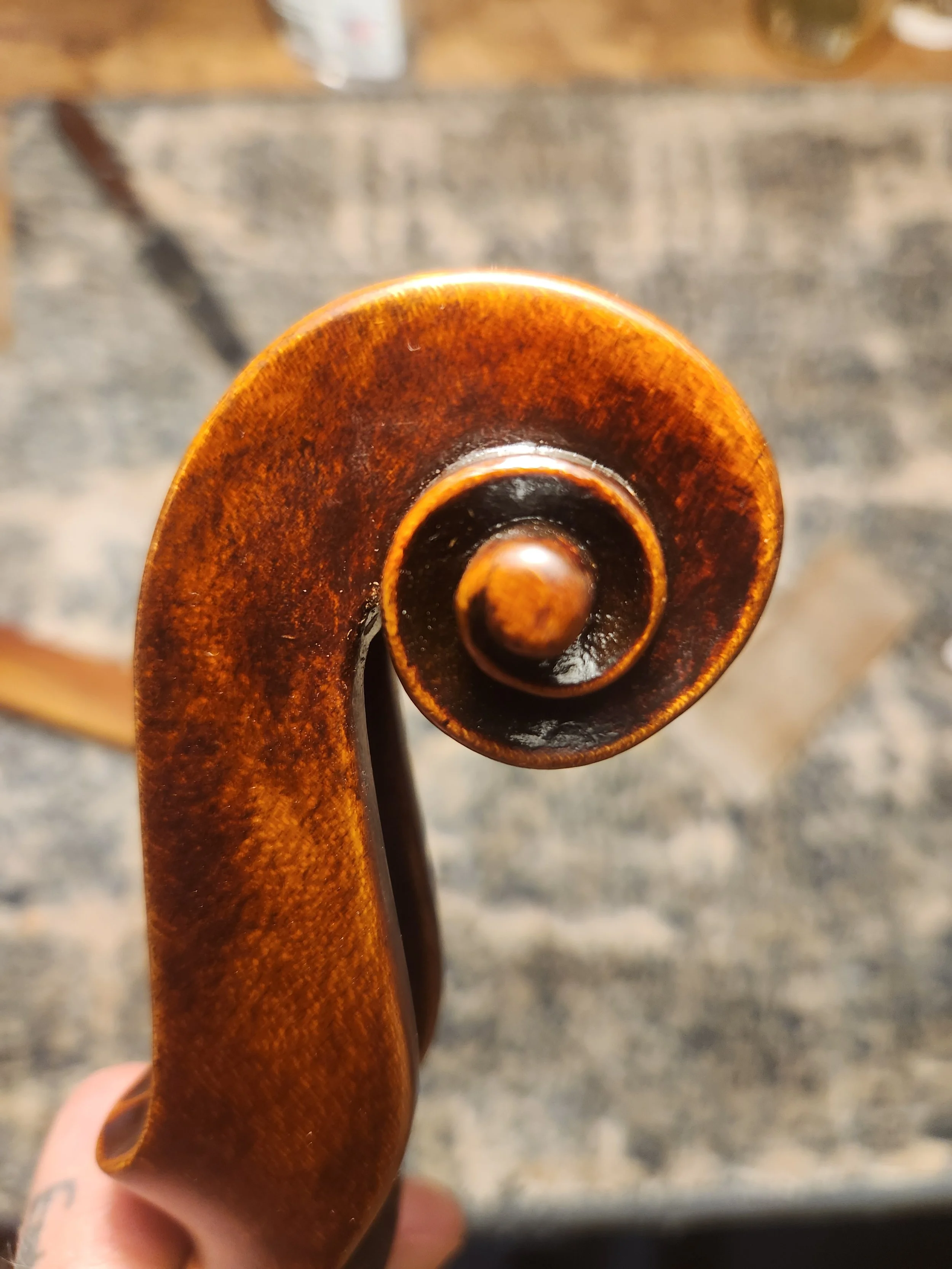
Below are pictures of the finished varnish—both of the scroll, pegbox, neck, button, and the entire instrument.